Cloud Hosting Models Explained a Complete Enterprise Guide
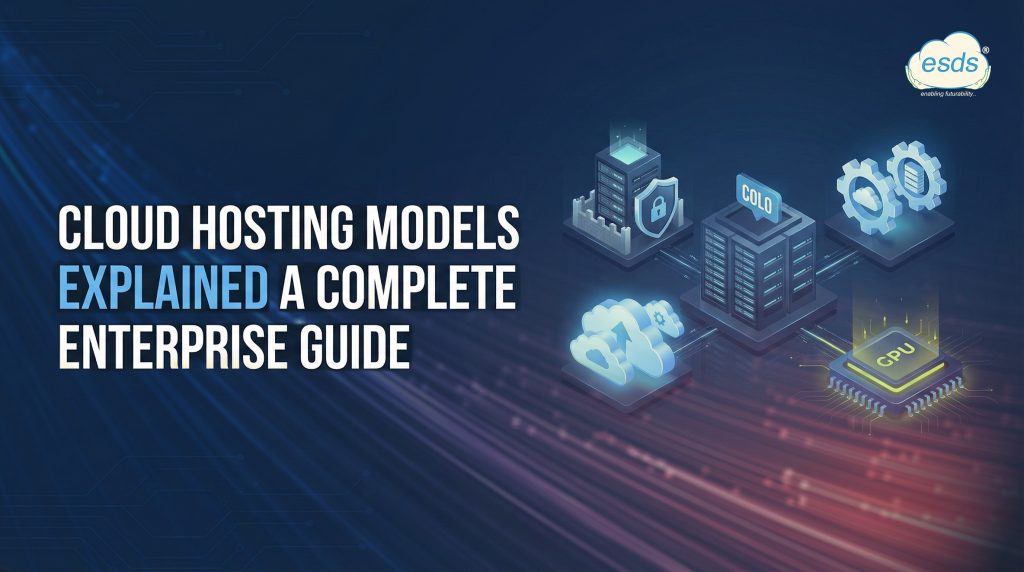
One of the most important choices businesses must make during their digital transformation process is which cloud deployment option to choose. Understanding deployment alternatives is more important than ever for business success, since 92% of firms use a multiple clouds method and global cloud infrastructure spending is expected to top $1 trillion in 2024.
In this guide we will look at the five main cloud hosting models, their practical uses, and the strategic factors that decide which method best meets the requirements of your organizations.
Key Cloud Computing Statistics
Growth of the Global Cloud Market
Due to the growing reliance on digital infrastructure, remote work, and data-driven technologies, the worldwide cloud computing business has grown quickly. The use of AI, big data, IoT, and software development techniques that depend on scalable infrastructure has expedited this trend.
Statistics on cloud growth:
- The market for cloud computing is expected to reach $1.614 trillion by 2030, up from $912.77 billion in 2025.
- By 2026, it is anticipated that the public cloud industry alone would surpass $1 trillion.
- In 2024, North America will account for $248.07 billion, while the United States will contribute $183.57 billion.
- The Asia-Pacific area is expanding quickly; by 2027, China’s public cloud income is expected to reach $121 billion.
Why Understanding Hosting Models Matters
Every enterprise workload has different requirements related to performance, data security, compliance, scalability, cost predictability, and operational control. Choosing the wrong hosting model can lead to higher costs, compliance gaps, performance limitations, or operational complexity.
This is why a structured hosting comparison India focused approach is critical before making any IT infrastructure decision.
Public Cloud Hosting
Public cloud hosting refers to shared cloud infrastructure delivered over the internet where compute, storage, and networking resources are provisioned on demand. Resources are shared across multiple customers while being logically isolated.
Key Characteristics
- On demand scalability
- Usage based pricing
- Minimal infrastructure management for customers
- Faster application deployment
Public cloud works best where speed and elasticity are more important than deep control or strict data residency requirements.
Private Cloud Hosting
Private cloud hosting provides cloud capabilities in a dedicated environment reserved for a single organization. It offers virtualization, automation, and self-service provisioning while maintaining isolation and governance.
Key Characteristics
• Dedicated compute and storage resources
• Greater control over security and configurations
• Custom performance tuning
• Better alignment with regulatory requirements
ESDS provides private cloud services designed for enterprises that need control without losing cloud flexibility. ESDS private cloud enables organizations to deploy dedicated infrastructure with centralized management, automated provisioning, and governance aligned to Indian regulatory expectations.
This model is often selected by organizations that require data residency, predictable performance, and tighter operational control over their cloud environment.
Colocation Hosting
Colocation hosting allows enterprises to place their own servers and networking equipment inside a third-party data center. The data center provider manages power, cooling, physical security, and connectivity, while the customer retains ownership of hardware.
Key Characteristics
• Full ownership of hardware
• High physical security
• Predictable long-term costs
• Custom hardware configurations
ESDS offers colocation services from enterprise grade data centers in India with redundant power, advanced cooling, and carrier neutral connectivity. These services support enterprises that want to retain hardware control while offloading facility operations and infrastructure management.
Colocation is often chosen as part of a cloud vs colocation evaluation where control, compliance, and cost predictability are prioritized.
Hybrid Cloud Hosting
Hybrid cloud combines multiple hosting models into a unified architecture. It typically integrates private cloud or colocation with public cloud resources.
Key Characteristics
• Workload placement flexibility
• Cost optimization through workload distribution
• Improved business continuity
• Gradual cloud adoption
GPU Hosting and GPU as a Service
GPU hosting is designed for compute intensive workloads that require massive parallel processing power. GPUs are essential for AI, machine learning, deep learning, data analytics, and simulation workloads.
Why GPU Hosting Matters
Traditional CPU based infrastructure struggles with modern AI workloads. GPUs dramatically reduce processing time and enable large scale model training and inference.
ESDS GPU as a Service provides on demand access to GPU powered infrastructure hosted in Indian data centers. This offering allows organizations to consume GPU resources without investing in expensive hardware, making it a practical GPU hosting options guide for enterprises exploring AI adoption. The service supports flexible scaling and integrates with existing cloud and private environments.
Refer the detailed guide on How to Choose the Right Hosting Model for Enterprise IT Infrastructure to evaluate cloud, private, colocation, hybrid, and GPU hosting options based on workload, compliance, and scalability requirements.
Final Thoughts
There is no single best hosting model for every organization. Modern IT strategies are built by combining public cloud, private cloud, colocation, hybrid environments, and GPU hosting based on workload requirements.
This hosting comparison India guide demonstrates that informed decisions are driven by performance, compliance, scalability, and long-term cost considerations rather than trends alone.
With private cloud, colocation, and GPU focused offerings, ESDS supports enterprises across different stages of digital and AI transformation, enabling infrastructure choices that align with business priorities rather than forcing one size fits all solutions.
Frequently Asked Questions (FAQ’s)
1. What are the main cloud hosting models used by enterprises today?
Public cloud, private cloud, colocation, hybrid cloud, and GPU hosting are the primary models used based on workload and business requirements.
2. What is the difference between cloud hosting and colocation?
Cloud hosting provides provider managed virtual infrastructure, while colocation allows enterprises to run their own hardware in a third-party data center.
3. When should an organization choose private cloud instead of public cloud?
Private cloud is preferred when applications require higher security, compliance control, predictable performance, and data residency.
4. Is GPU hosting necessary for all AI and analytics workloads?
GPU hosting is required only for compute intensive workloads such as AI training, deep learning, and large-scale data processing.
5. How does hybrid cloud help enterprises balance cost and control?
Hybrid cloud enables enterprises to keep sensitive workloads private while using public cloud resources for scalability and cost efficiency.
6. How do Indian enterprises align hosting choices with data residency and compliance?
Indian enterprises often use India hosted private cloud, colocation, or GPU services from providers like ESDS to meet regulatory and operational requirements.


About Post Author