What Is Database-as-a-Service? A Complete Beginner’s Guide for 2026
India’s digital economy is accelerating at an unprecedented pace, with billions of UPI transactions monthly, large-scale e-governance platforms, and AI-powered enterprise applications all becoming the norm. At the centre of every one of these systems is a database. Yet, a significant portion of Indian enterprises are still running on traditional, self-managed database infrastructure that was simply never designed for the demands of 2026.
This is where Database-as-a-Service (DBaaS) comes in. And the reality is clear: adopting cloud database solutions in India is no longer a technology upgrade; it is a competitive necessity.
What Is DBaaS? The Meaning, Simply Explained
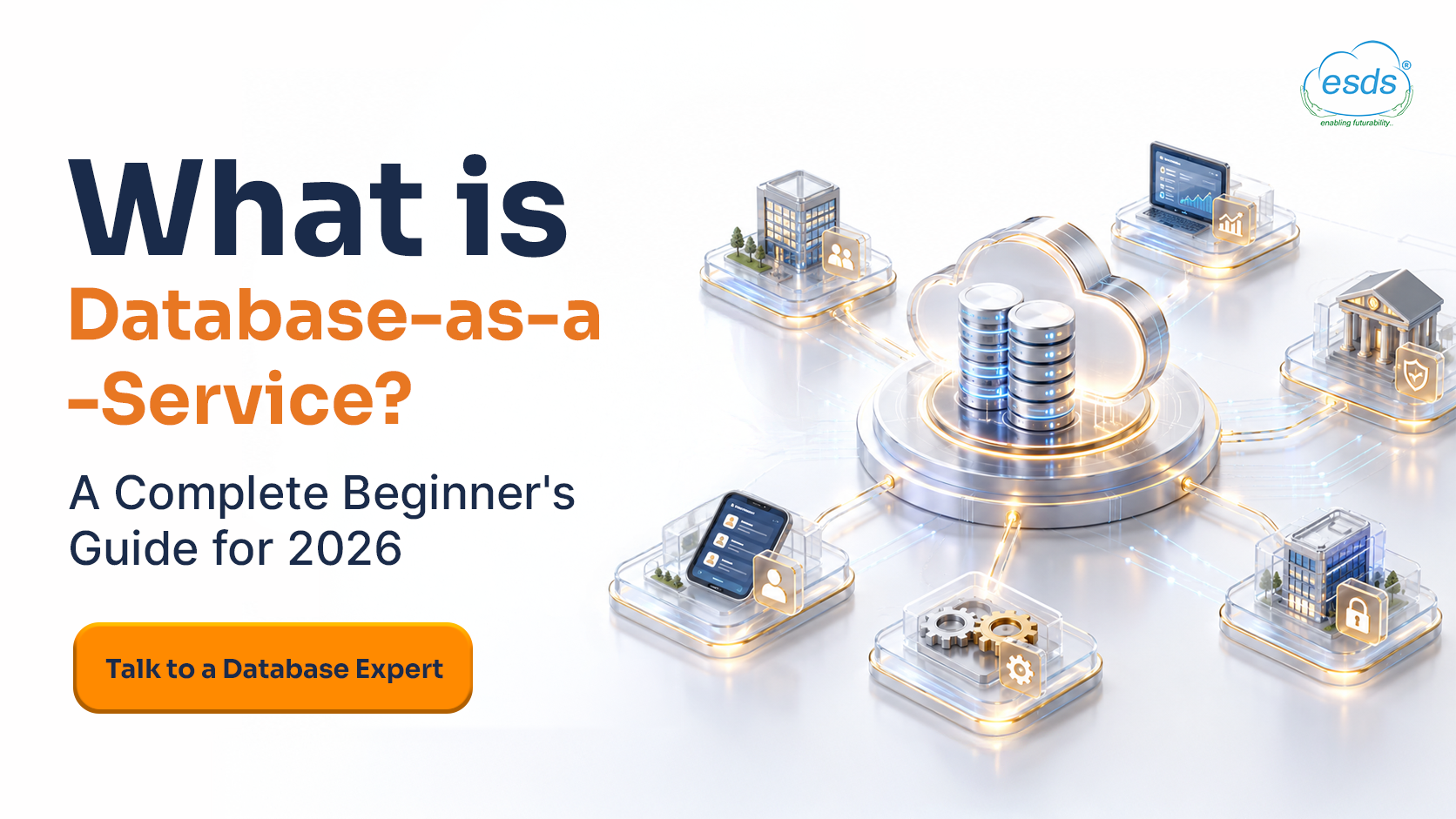
Database-as-a-Service (DBaaS) is a cloud-based model where a third-party provider hosts, manages, and maintains a database on your behalf. Instead of provisioning servers, installing software, managing patches, and hiring specialised database administrators, you simply connect and start building.
DBaaS is like renting office space rather than constructing a building. You get a fully equipped, maintained environment without the overhead of ownership.
A modern DBaaS platform gives your organisation:
- Managed Operations: No infrastructure overhead or DBA bottlenecks
- Elastic Scalability: Scale up or down automatically based on real demand
- Built-in Security: Encryption, access controls, and governance by default
- High Availability: Automated failover and disaster recovery out of the box
- Pay-as-you-Go: Metered billing — no overprovisioning, no waste
Today’s DBaaS platforms go far beyond managed MySQL. They support NoSQL, multi-model data, real-time analytics, vector search, and AI workloads, all within a single unified service.
Why Indian Enterprises Can No Longer Wait
India’s rapid digitalisation has created a new set of database demands that legacy infrastructure simply cannot meet. The DPDP Act, MeitY cloud guidelines, and RBI data localisation requirements now mandate data residency, audit trails, and robust governance obligations that self-managed, on-premise systems were not architected to fulfil.
Beyond compliance, the AI revolution has permanently changed what databases must do. Organisations across BFSI, retail, and government are building GenAI applications, real-time fraud detection pipelines, and Retrieval-Augmented Generation (RAG) systems, all of which require modern, cloud-native database capabilities.
Meanwhile, the competitive gap between DBaaS adopters and laggards is widening. Enterprises already on cloud database solutions are shipping faster, scaling without friction, and spending engineering time on products, not infrastructure maintenance.
The Cost of Inaction: Unplanned database downtime costs Indian enterprises between ₹10 lakh and ₹1 crore per hour, depending on the sector, a figure that makes the economics of managed DBaaS compelling.
ESDS DBaaS: Purpose-Built for India’s Regulated Ecosystem
While global hyperscalers offer generic DBaaS products, Indian enterprises, especially in BFSI, government, and regulated sectors, need a platform that delivers enterprise database capabilities while guaranteeing data sovereignty and local regulatory compliance.
ESDS Database as a Service is built precisely for this requirement. Delivered on ESDS Sovereign Cloud and powered by Couchbase’s distributed NoSQL technology, it offers:
- Data Residency Within India: All data stays within Indian borders, critical for DPDP Act, RBI, and MeitY alignment
- Multi-Dimensional Scaling (MDS): Independently scale query, index, analytics, and data services for cost efficiency
- Zero-ETL Analytics: Run real-time analytics directly on operational data, no separate pipeline needed
- Integrated Vector & Full-Text Search: Native support for AI, semantic search, and RAG workflows, no additional infrastructure
- Enterprise Security: Encryption, RBAC, and certifications including ISO 27001, MeitY, and STQC
ESDS brings 19+ years of Indian market experience, 6 data centers across India (Nashik, Mumbai, Mohali, Bengaluru, Kolkata, and Noida), 99.95% uptime, and a client base of 1,300+ organisations, including 152 BFSI clients and 115 government bodies, making it one of the most trusted cloud database solutions in India today.
The platform is designed for real-time transactional workloads, AI-driven applications, search-intensive platforms, and distributed edge environments supporting the full range of what modern Indian enterprises need to build and operate at scale.
How to Get Started with Database-as-a-Service
Migrating to a DBaaS model doesn’t have to be disruptive. A practical approach:
- Audit: Map your existing databases, workloads, data volumes, and compliance gaps
- Define Requirements: Identify latency needs, peak load profiles, and data sovereignty mandates
- Evaluate: For regulated Indian sectors, prioritise sovereign cloud infrastructure and local certifications
- Pilot: Migrate a non-critical workload first to validate performance and operational fit
- Deploy: Move to production with your DBaaS provider managing the underlying infrastructure
Conclusion
The window for hesitation has closed. Regulatory mandates, AI adoption, and competitive pressure have converged to make Database-as-a-Service in India not just a smart choice but the only viable path forward for enterprises serious about scaling in 2026. For Indian organisations that need performance, sovereignty, and compliance in a single managed platform, ESDS DBaaS offers a purpose-built answer. The time to act is now.
Ready to Modernise Your Database Infrastructure?


About Post Author