Private Cloud
A dedicated IT infrastructure offering secure and scalable cloud hosting with full control over resources.
Explore MoreOur patented cloud technology adjusts resources based on real-time business requirements
Ensuring national data security by reducing dependence on foreign cloud providers.
Addressing cybersecurity risks and data privacy concerns.
Meeting regulatory compliance with India's evolving data laws.
Supporting economic growth by investing in indigenous cloud infrastructure.
Reducing costs associated with offshore data management.
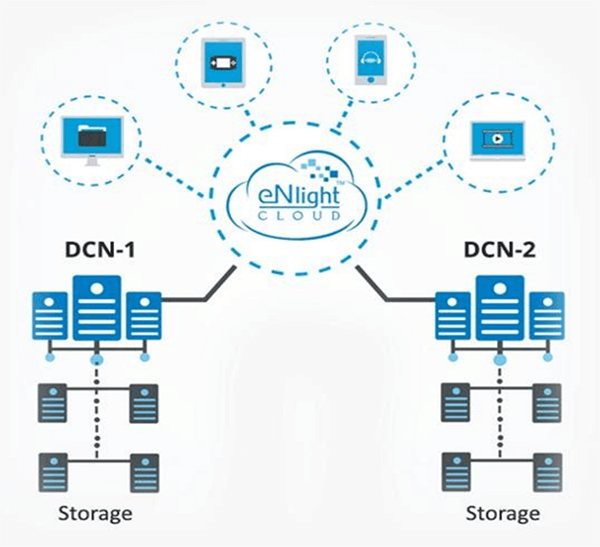
Since 2010, ESDS has played a key role in India's cloud adoption. eNlight Cloud offers a scalable, patented cloud technology in India and the US. Our patented auto vertical scaling technology dynamically adjusts cloud resources in real time, helping businesses optimize costs and IT efficiency.
eNlight Cloud enables seamless migration and integration with existing IT systems while incorporating advanced security features, including Bring Your Own Encryption (BYOE) for enhanced data control.
Cloud solutions designed for BFSI, Enterprise, and Government sectors, aligned with India’s digital infrastructure needs.
A dedicated IT infrastructure offering secure and scalable cloud hosting with full control over resources.
Explore More
Trusted by 1200+ enterprises, this solution provides cost control for businesses.
Explore More
A specialized cloud platform supporting 152 Indian banks and financial institutions with core banking, Managed Disaster Recovery, and advanced security solutions.
Explore More
A MeitY-empaneled and STQC-compliant cloud designed to meet the digital needs of government agencies across India.
Explore More
SAP HANA is a database management system developed by SAP, designed for high-performance analytics and real-time data processing, whose primary function is to store and retrieve data as requested by the applications.
Explore MoreCompliance & Security:
Advanced cloud security protocols.
Storage Solutions:
Block, file, and object storage options.
Serverless Computing:
Scalable, pay-as-you-use infrastructure..
CDN & Media Services:
Optimized content delivery and media streaming.
The ESDS eNlight cloud is based on three essential security architecture components
Confidentially - Prevent unauthorized access to data to protect and safeguard it.
Integrity - Prevent unauthorized alterations to ensure data integrity and correctness.
Availability - Make sure authorized users can access the data by using redundancy and resilience.
Although security is required, advanced security is voluntary. In order to earn your complete trust, we have implemented advanced and managed security through a multi-layered security environment that is entirely managed and maintained in our datacenter.
eNlight 360°, the Data Center Infrastructure Management (DCIM) tool by ESDS, provides a single sign-on module as IAM, which takes care of Identity and Access Management, User management and encryption keys, and session sharing with add-on token-based security.
Web Application Firewall and DDoS Prevention
Automated Patch Management and Cyber threat Prevention
VTMScan - A complete web-application scanning tool
CAPACITIES AND FEATURES
Application Delivery
Authentication
Management and Reporting
All types of online threats and cyberattacks, including the OWASP Top-10 Vulnerabilities, SQL Injections, and Cross-Site Scripting, are scanned for and detected by VTMScan. Through a thorough evaluation of the website security, VTMScan users receive total protection for their web assets. When a threat is imminent, VTMScan provides a comprehensive scanning solution with immediate alerts.
CSP must provide native service for security like Identity & access management, manage user access and encryption keys, Single sign on service for cloud and a Centralize Governance and Compliance Management
We provide detailed logs of all user activity within a CSP account, including API caller identity, timestamps, source IP addresses, request parameters, and response elements, to support security analysis, resource change tracking, and compliance auditing.
Our fully managed service in India helps identify potentially fraudulent online activities, such as online payment fraud and the creation of fake accounts, ensuring robust protection for your business.
HSMHSM as a service are being provided as managed shared infrastructure-based or dedicated infrastructure-based model, ensuring that dedicated HSM is exclusively for each subscription where Data encryption is default, with flexible options for managing encryption keys and data access. VM’s are also provided that ensure encryption of data in transit, at rest (using CMEK and CSEK), and while in use.
To automatically build, test, distribute, deploy, and monitor applications on any operating system, you can utilize a combination of various Devops tools and practices. Largely, this involves:
Code Repository: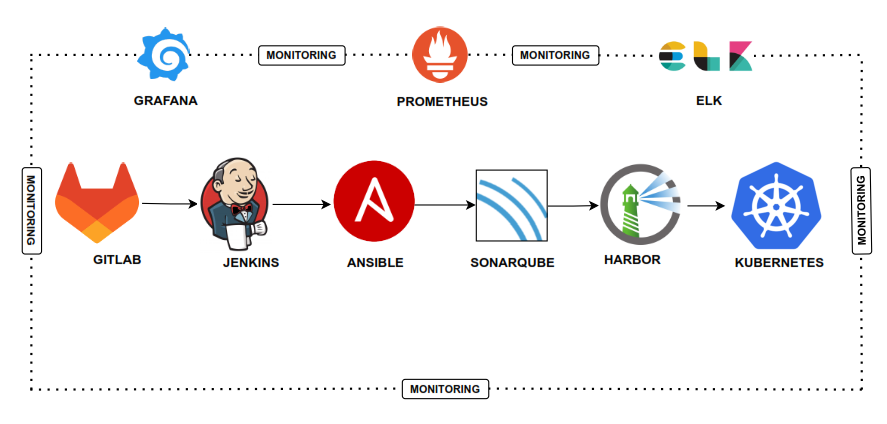
Cloud-based Integrated Development Environment (IDE) services that enable developers to collaborate in real-time. These cloud IDE services provide a web-based development environment accessible from anywhere, facilitating collaboration and streamlining the software development process. It comes with features like:
Web-Based IDE:| Sr No. | Features and Operations Supported by ESDS DevOps Service | Solution Integrated | Details |
|---|---|---|---|
| 1 | Automatically build, test, distribute, deploy and monitor iOS, Android, Windows and macOS apps—all in one place | Jenkins | Jenkins is a CI/CD tool which is best practices for automatically build, test, distribute & deploy purpose |
| 2 | Developers can regularly merge their code changes into a central repository, after which automated builds and tests are run. | Gitlab | Gitlab tool can be used for Central Repository purpose to manage and integrate the code regularly. With Gitlab developers can share their code. |
| 3 | Must provide fully managed service to implement end to end CI CD (Continuous Integration & Continuous Deployment) pipeline | Jenkins | Jenkins is a CICD tool which can be used for building & deploying the application code. |
| 4 | Should securely store and version application's source code and automatically build, test, and deploy the application | Gitlab & Jenkins | Gitlab stores the version of source code uploaded by developer to meet the versioning. On other hand, Jenkins automatically builds test & deploy the application |
| 5 | Cloud Service Provider should offer a managed service to analyze and debug applications | SonarQube | SonarQube helps developers and teams analyze and improve the quality of their codebase by detecting code smells, bugs, security vulnerabilities, and other issues. |
| 6 | The manage service to analyse and debug applications should have Filtering capability and interactive capability to interpret trace data | ELK Stack | Elastic Stack helps to collect, analyze, and visualize log data from applications. It enables us to filter and search logs based on various criteria, including timestamps, log levels, keywords, and custom fields & trace the data. |
| 7 | Cloud Service Provider should offer a Cloud based IDE (Integrated Development Platform) service to collaborate with the developers in real time | VS Code | Visual Studio Code (VS Code) allows to share workspaces with others, facilitating collaboration and concurrent editing of code. Workspace sharing in VS Code enables multiple developers to work on the same project simultaneously, making it easier to collaborate and coordinate efforts. |
| 8 | Cloud Service Provider should offer a managed source control service to store code in Private Git Repositories | Gitlab, Bitbucket | Gitlab offers a managed service to store the code in Private Git Repositories. |
The architecture of Docker consists of several key components working together:
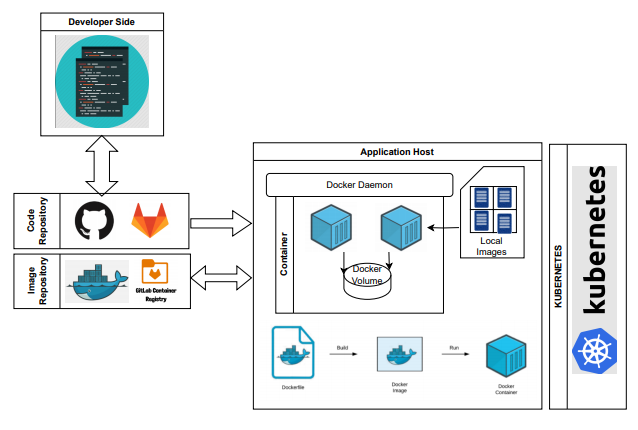
The working of Kubernetes can be understood through the following key steps:
Disk IOPS can be applied to new or existing virtual machines with eNlight 360°. Disk IOPS manages storage performance efficiency. In addition, it improves service quality and handles disk I/O, preventing VMs from using too many disk operations and creating I/O bottlenecks. eNlight 360° currently offers Disk IOPS in three levels: Gold, Platinum, and Silver
Our block storage service enables the creation and management of storage volumes that can be attached to virtual machines, providing high-performance, low-latency storage suitable for transactional and database workloads.
ESDS Storage supports SSD-backed volumes that provide low-latency performance suitable for workloads requiring quick access, while maintaining redundancy and reliability. These volumes are designed to deliver consistent performance without relying on disk striping, offering high durability and supporting annual failure rates of less than 0.01%.
Storage allows flexible volume size increases in small increments, supports high random read operations, and provides secure data controls within the Storage Area Network to restrict client access to allocated storage.
Archival storage:Archival storage is designed to retain data securely and cost-effectively over long periods of time, especially for information that is infrequently accessed but must be preserved for compliance, reference, or historical needs. As a Cloud Service Provider (CSP), we offer archival storage that ensures:
This service is particularly suited for organizations that need to store regulatory records, audit logs, legal documents, backup copies, or historical datasets for extended periods without incurring high storage costs.
managed secure cloud file storage service. In eNlight 360°, while adding a master compute, the user needs to enter the URL, username, and password. Then, the system will verify those credentials and proceed further.
Data Security at storage layerESDS Storage provides the protects against unauthorized access to lost, stolen, or failed drives by ensuring all sensitive user data on the system is encrypted as it is written to disk. It does this through hardware-based encryption modules located in the SAS controllers and SAS IO modules which encrypt data as it is written to the backend drives, and decrypt data as it is retrieved from these drives.
Additionally, controller-based method has minimal performance impact for typical mixed workloads, and no impact to other storage service services due to the level at which the encryption is performed.
For key generation and management, ESDS Storage by default uses an internal, fully-automated key manager. This key manager has several responsibilities including generating keys using AES-256 ,storing keys in a secure key-store, monitoring drive status changes that result in key creating/deletion, and encryption of all data encryption keys prior to moving them within the array for all encryption operations.
ESDS Stored data security is achieved through the combined use of several encryption keys, which together ensure that neither the drives themselves, nor the keys which encrypt these drives, can be read by unauthorized parties finding themselves in possession of drives that have been removed from the storage system.
Data encryption in-transitFor in transit data encryption, IPSEC VPN can be utilized between Ports to client and cloud services. Enterprise cloud storage allows to scalibility to Petabyte which can be accessed by thousands of concurrent NFS users. Depending on the selection of the storage categories and IOPs latency varies from 2 milli seconds to 15 milliseconds.
All ESDS data centers are connected with multi Gbps fiber connectivity which allows seamless replication and data redundancy for the client at enterprise cloud storage layer.
eNlight enterprise cloud storage provides read after write consistency where each read-and-write operation is guaranteed to return the most recent version of the data.
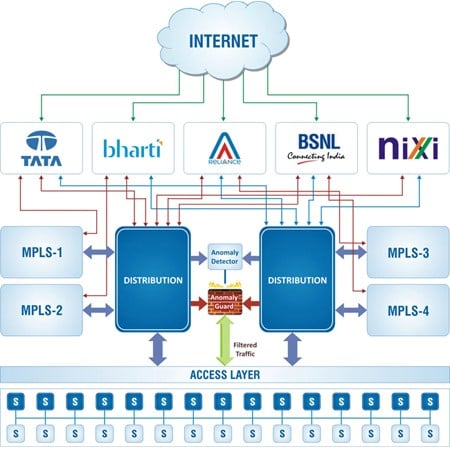
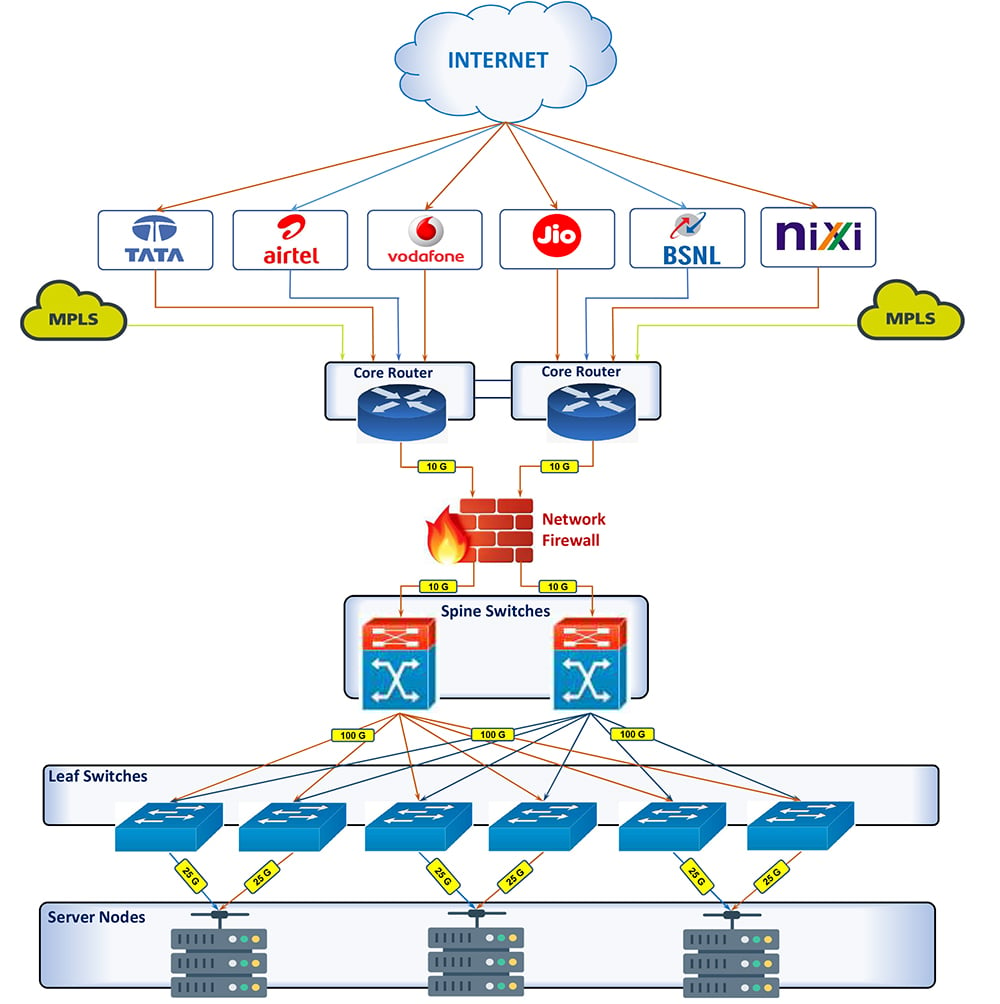
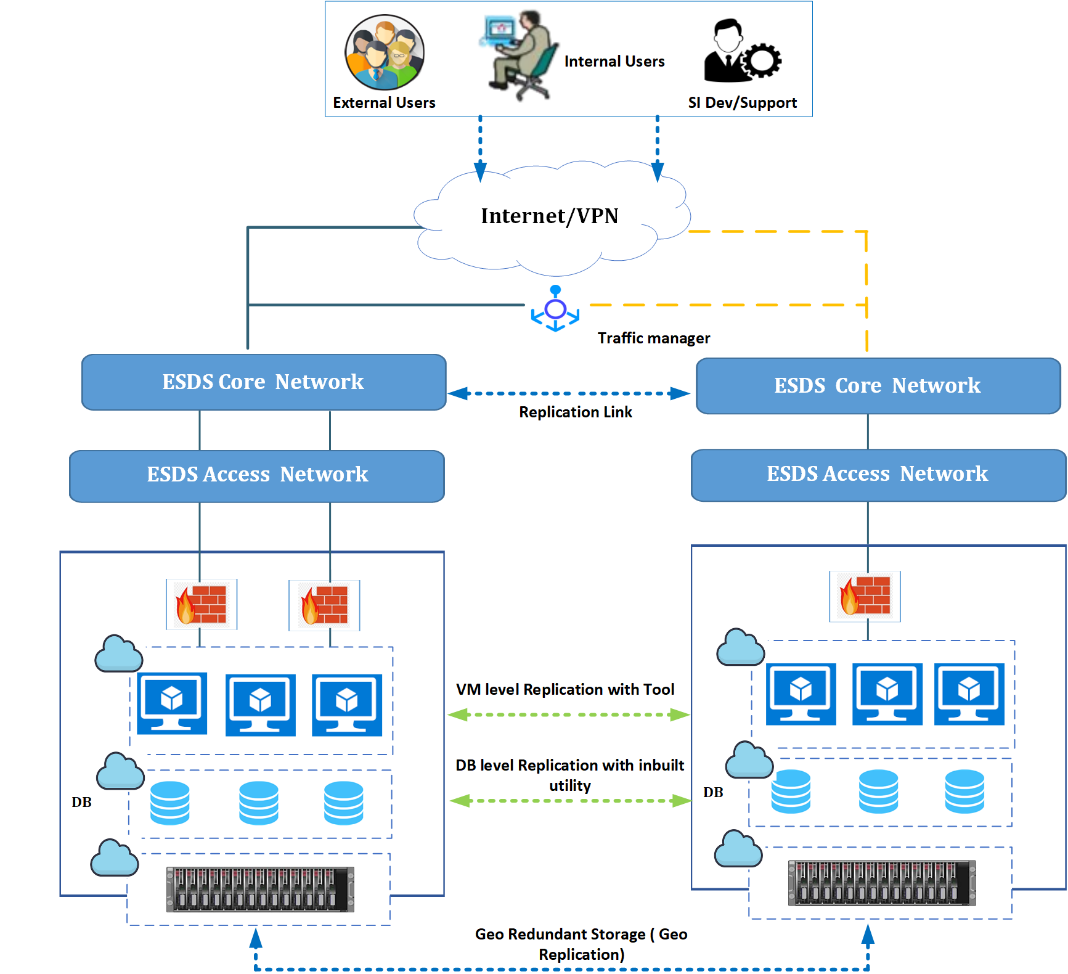
eNlight Global traffic manager and DRM:
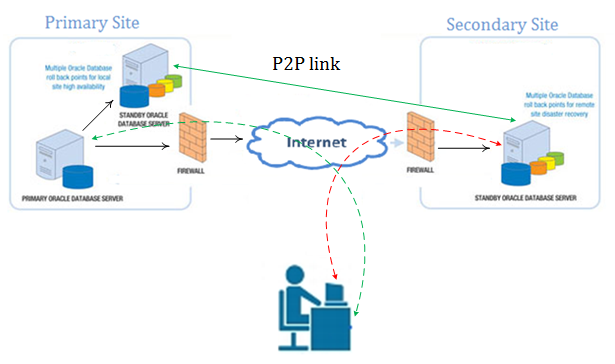
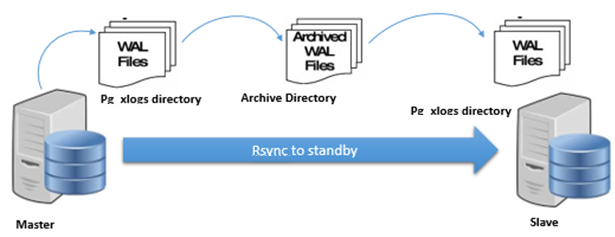
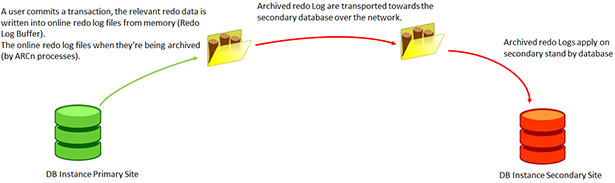
Primary Site: Primary site will have the two database servers configured in the active – passive mode cluster.
Secondary Site: On secondary site standby server will be deployed, it will only use to replicate the data from primary to secondary site. In case disaster the server will be become live.
External & internal users will access the site from primary location in case of failure of site user will switch to the secondary site with the minimum down time.
SQL and NoSQL databases as a service (DBaaS) are cloud-based offerings that provide managed database solutions for both SQL and NoSQL data models. These services eliminate the need for organizations to manage the underlying infrastructure and administrative tasks associated with database management. Instead, users can focus on their applications and data without worrying about server provisioning, maintenance, backups, and scaling.
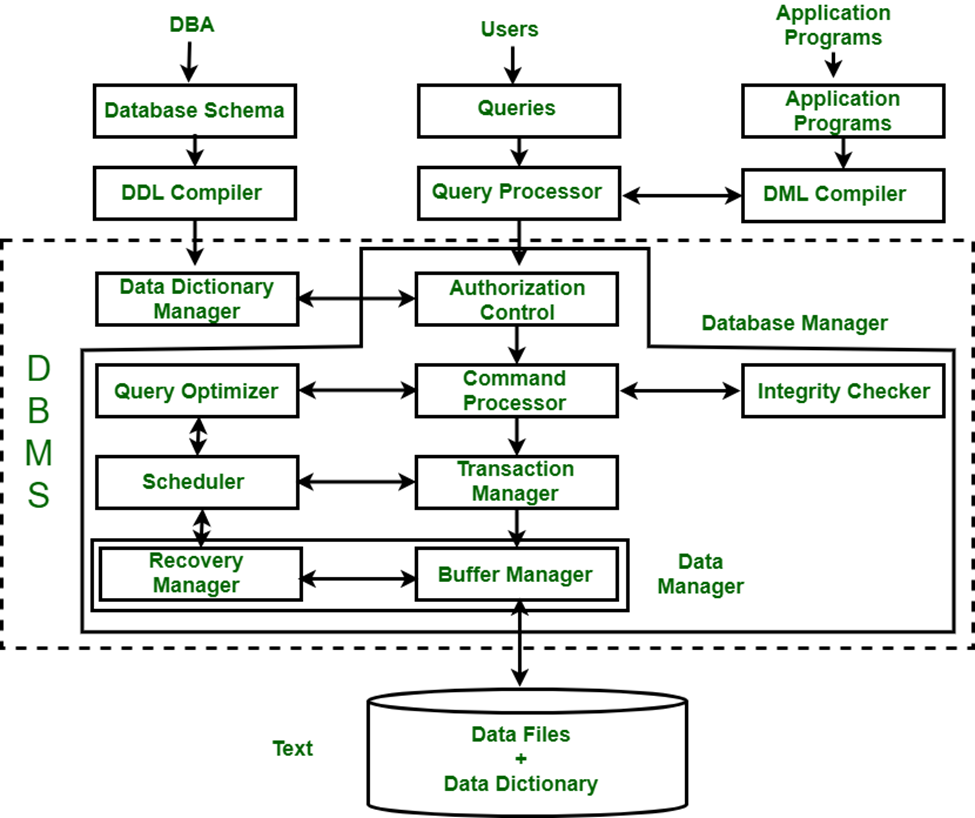
RDBMS:(Relational Database Service): Offers managed SQL databases like MySQL, PostgreSQL, Oracle, SQL Server, etc.
Ability to support high avilability through redundant deployement in multiple data center sites and provision to scale by adding/removing read replicas.
SQL DBaaS offerings typically include features like manual/automated backups, snapshots, high availability, replication for data redundancy, point in time recovery, security controls, monitoring, and performance optimization. These services often offer flexible scaling options to handle increased workloads or changing requirements. These services make sure continous support and availability for at least 24 months.
Users can interact with SQL DBaaS through APIs, command-line tools, or graphical interfaces provided by the respective cloud platforms. They can perform tasks such as creating databases, managing schemas, executing queries, monitoring performance, and setting up security measures.
SQL DBaaS is suitable for applications that require structured data, strong consistency, ACID transactions, and SQL query capabilities. It is widely used in various industries for web applications, enterprise software, analytics, and reporting.
| VM Configuration | |
| 1 | Managed DB - 1 vCPU, 2 GB RAM |
| 2 | Managed DB - 2 vCPU, 4 GB RAM |
| 3 | Managed DB - 2 vCPU, 8 GB RAM |
| 4 | Managed DB - 4 vCPU, 8 GB RAM |
| 5 | Managed DB - 4 vCPU, 16 GB RAM |
| 6 | Managed DB - 4 vCPU, 32 GB RAM |
| 7 | Managed DB - 8 vCPU, 16 GB RAM |
| 8 | Managed DB - 8 vCPU, 32 GB RAM |
| 9 | Managed DB - 8 vCPU, 64 GB RAM |
| 10 | Managed DB - 16 vCPU, 32 GB RAM |
| 11 | Managed DB - 16 vCPU, 64 GB RAM |
| 12 | Managed DB - 16 vCPU, 128 GB RAM |
| 13 | Managed DB - 32 vCPU, 128 GB RAM |
| 14 | Managed DB - 32 vCPU, 256 GB RAM |
| MySQL as a service | |
| 1 | Managed DB - 1 vCPU, 2 GB RAM |
| 2 | Managed DB - 2 vCPU, 4 GB RAM |
| 3 | Managed DB - 2 vCPU, 8 GB RAM |
| 4 | Managed DB - 4 vCPU, 8 GB RAM |
| 5 | Managed DB - 4 vCPU, 16 GB RAM |
| 6 | Managed DB - 4 vCPU, 32 GB RAM |
| 7 | Managed DB - 8 vCPU, 16 GB RAM |
| 8 | Managed DB - 8 vCPU, 32 GB RAM |
| 9 | Managed DB - 8 vCPU, 64 GB RAM |
| 10 | Managed DB - 16 vCPU, 32 GB RAM |
| 11 | Managed DB - 16 vCPU, 64 GB RAM |
| 12 | Managed DB - 16 vCPU, 128 GB RAM |
| 13 | Managed DB - 32 vCPU, 128 GB RAM |
| 14 | Managed DB - 32 vCPU, 256 GB RAM |
| PostgreSQL as a Service | |
| 1 | Managed DB - 1 vCPU, 2 GB RAM |
| 2 | Managed DB - 2 vCPU, 4 GB RAM |
| 3 | Managed DB - 2 vCPU, 8 GB RAM |
| 4 | Managed DB - 4 vCPU, 8 GB RAM |
| 5 | Managed DB - 4 vCPU, 16 GB RAM |
| 6 | Managed DB - 4 vCPU, 32 GB RAM |
| 7 | Managed DB - 8 vCPU, 16 GB RAM |
| 8 | Managed DB - 8 vCPU, 32 GB RAM |
| 9 | Managed DB - 8 vCPU, 64 GB RAM |
| 10 | Managed DB - 16 vCPU, 32 GB RAM |
| 11 | Managed DB - 16 vCPU, 64 GB RAM |
| 12 | Managed DB - 16 vCPU, 128 GB RAM |
| 13 | Managed DB - 32 vCPU, 128 GB RAM |
| 14 | Managed DB - 32 vCPU, 256 GB RAM |
| Oracle DB as a Service | |
| 1 | Managed DB - 1 vCPU, 2 GB RAM |
| 2 | Managed DB - 2 vCPU, 4 GB RAM |
| 3 | Managed DB - 2 vCPU, 8 GB RAM |
| 4 | Managed DB - 4 vCPU, 8 GB RAM |
| 5 | Managed DB - 4 vCPU, 16 GB RAM |
| 6 | Managed DB - 4 vCPU, 32 GB RAM |
| 7 | Managed DB - 8 vCPU, 16 GB RAM |
| 8 | Managed DB - 8 vCPU, 32 GB RAM |
| 9 | Managed DB - 8 vCPU, 64 GB RAM |
| 10 | Managed DB - 16 vCPU, 32 GB RAM |
| 11 | Managed DB - 16 vCPU, 64 GB RAM |
| 12 | Managed DB - 16 vCPU, 128 GB RAM |
| 13 | Managed DB - 32 vCPU, 128 GB RAM |
| 14 | Managed DB - 32 vCPU, 256 GB RAM |
| Maria DB as a Service | |
| 1 | Managed DB - 1 vCPU, 2 GB RAM |
| 2 | Managed DB - 2 vCPU, 4 GB RAM |
| 3 | Managed DB - 2 vCPU, 8 GB RAM |
| 4 | Managed DB - 4 vCPU, 8 GB RAM |
| 5 | Managed DB - 4 vCPU, 16 GB RAM |
| 6 | Managed DB - 4 vCPU, 32 GB RAM |
| 7 | Managed DB - 8 vCPU, 16 GB RAM |
| 8 | Managed DB - 8 vCPU, 32 GB RAM |
| 9 | Managed DB - 8 vCPU, 64 GB RAM |
| 10 | Managed DB - 16 vCPU, 32 GB RAM |
| 11 | Managed DB - 16 vCPU, 64 GB RAM |
| 12 | Managed DB - 16 vCPU, 128 GB RAM |
| 13 | Managed DB - 32 vCPU, 128 GB RAM |
| 14 | Managed DB - 32 vCPU, 256 GB RAM |
Managed NoSQL document database service compatible with MongoDB.
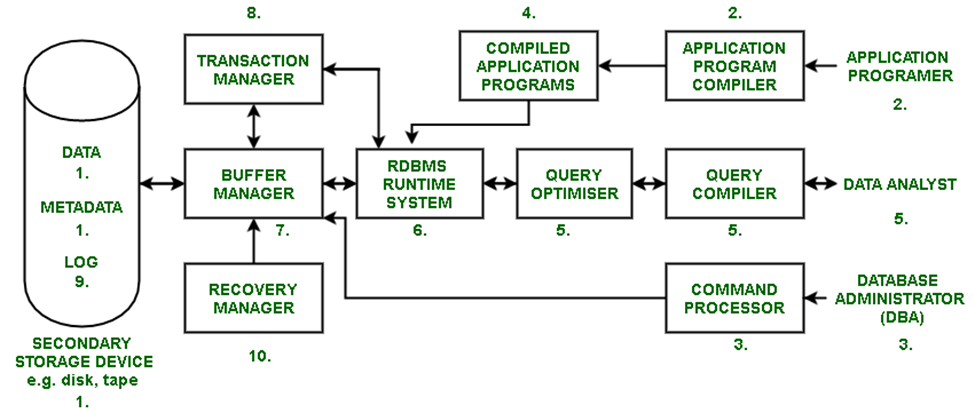
NoSQL (Not Only SQL) databases are a category of database technologies that provide alternatives to traditional SQL (Structured Query Language) databases. They are designed to handle large volumes of unstructured, semi-structured, and diverse data types, offering flexibility, scalability, and high performance. Here are some key features and offerings of NoSQL database technologies:
Data Model Flexibility: NoSQL databases offer various data models to accommodate different data types and structures, including:
Document Databases: : Store and retrieve data in flexible, JSON-like documents (e.g. MongoDB, Couchbase).
Key-Value Stores: : Use simple key-value pairs for data storage and retrieval (e.g. Redis, Riak).
Wide-Column Stores: Store data in column families with dynamic columns (e.g., Cassandra, HBase).
Graph Databases: Represent and query data as nodes, edges, and properties (e.g., Neo4j, Amazon Neptune).
Scalability: : NoSQL databases are built to scale horizontally, allowing them to handle large amounts of data and high read/write workloads. They distribute data across multiple servers, enabling seamless scaling as data grows.
High Performance: : NoSQL databases are optimized for fast data retrieval and processing. They leverage techniques like in-memory caching, sharding, and parallel processing to achieve high throughput and low latency.
Flexibility in Schema Design: : NoSQL databases provide schema flexibility, allowing for agile development and accommodating evolving data structures without requiring predefined schemas.
Distributed and Fault-Tolerant Architecture: : NoSQL databases are designed for distributed environments, ensuring data replication, fault tolerance, and automatic data recovery in case of node failures.
Support for Big Data Analytics: : Many NoSQL databases integrate with big data processing frameworks like Apache Hadoop and Apache Spark, enabling analytics and complex data processing tasks on large datasets.
Cloud-Native Capabilities: : NoSQL databases are well-suited for cloud environments, offering elasticity, scalability, and managed database services as part of cloud platforms.
Developer-Friendly Interfaces: : NoSQL databases often provide APIs, libraries, and query languages tailored for specific data models, making it easier for developers to work with the databases.
Use Cases: : NoSQL databases are commonly used in various applications and industries, including e-commerce, social media, content management, IoT, real-time analytics, and personalized recommendation systems.
The choice between SQL and NoSQL DBaaS depends on the specific requirements of your application, data model, scalability needs, and the query patterns you anticipate. Consider factors like data structure, transactional consistency, horizontal scalability, and performance characteristics to determine whether a SQL or NoSQL DBaaS solution aligns better with your use case.
NO SQL Database Managed DB servicesESDS eNlight cloud services supports and have capability to provide NO SQL database Managed services There are four major types of NoSQL databases emerged: document databases, key-value databases, wide-column stores, and graph databases.
ESDS eNlight Cloud Services supports and offers NoSQL database managed services, ensuring continuous availability of the database for a minimum of the next 24 months or as per client requirements.
| NoSQL DB as a service (MongoDB) | |
| 1 | Managed DB - 1 vCPU, 2 GB RAM |
| 2 | Managed DB - 2 vCPU, 4 GB RAM |
| 3 | Managed DB - 2 vCPU, 8 GB RAM |
| 4 | Managed DB - 4 vCPU, 8 GB RAM |
| 5 | Managed DB - 4 vCPU, 16 GB RAM |
| 6 | Managed DB - 4 vCPU, 32 GB RAM |
| 7 | Managed DB - 8 vCPU, 16 GB RAM |
| 8 | Managed DB - 8 vCPU, 32 GB RAM |
| 9 | Managed DB - 8 vCPU, 64 GB RAM |
| 10 | Managed DB - 16 vCPU, 32 GB RAM |
| 11 | Managed DB - 16 vCPU, 64 GB RAM |
| 12 | Managed DB - 16 vCPU, 128 GB RAM |
| 13 | Managed DB - 32 vCPU, 128 GB RAM |
| 14 | Managed DB - 32 vCPU, 256 GB RAM |
| NoSQL DB as a service (Cassandra) | |
| 1 | Managed DB - 1 vCPU, 2 GB RAM |
| 2 | Managed DB - 2 vCPU, 4 GB RAM |
| 3 | Managed DB - 2 vCPU, 8 GB RAM |
| 4 | Managed DB - 4 vCPU, 8 GB RAM |
| 5 | Managed DB - 4 vCPU, 16 GB RAM |
| 6 | Managed DB - 4 vCPU, 32 GB RAM |
| 7 | Managed DB - 8 vCPU, 16 GB RAM |
| 8 | Managed DB - 8 vCPU, 32 GB RAM |
| 9 | Managed DB - 8 vCPU, 64 GB RAM |
| 10 | Managed DB - 16 vCPU, 32 GB RAM |
| 11 | Managed DB - 16 vCPU, 64 GB RAM |
| 12 | Managed DB - 16 vCPU, 128 GB RAM |
| 13 | Managed DB - 32 vCPU, 128 GB RAM |
| 14 | Managed DB - 32 vCPU, 256 GB RAM |
| NoSQL DB as a service (Hbase) | |
| 1 | Managed DB - 1 vCPU, 2 GB RAM |
| 2 | Managed DB - 2 vCPU, 4 GB RAM |
| 3 | Managed DB - 2 vCPU, 8 GB RAM |
| 4 | Managed DB - 4 vCPU, 8 GB RAM |
| 5 | Managed DB - 4 vCPU, 16 GB RAM |
| 6 | Managed DB - 4 vCPU, 32 GB RAM |
| 7 | Managed DB - 8 vCPU, 16 GB RAM |
| 8 | Managed DB - 8 vCPU, 32 GB RAM |
| 9 | Managed DB - 8 vCPU, 64 GB RAM |
| 10 | Managed DB - 16 vCPU, 32 GB RAM |
| 11 | Managed DB - 16 vCPU, 64 GB RAM |
| 12 | Managed DB - 16 vCPU, 128 GB RAM |
| 13 | Managed DB - 32 vCPU, 128 GB RAM |
| 14 | Managed DB - 32 vCPU, 256 GB RAM |
| Graph DB as a service (Neo4J) | |
| 1 | Managed DB - 1 vCPU, 2 GB RAM |
| 2 | Managed DB - 2 vCPU, 4 GB RAM |
| 3 | Managed DB - 2 vCPU, 8 GB RAM |
| 4 | Managed DB - 4 vCPU, 8 GB RAM |
| 5 | Managed DB - 4 vCPU, 16 GB RAM |
| 6 | Managed DB - 4 vCPU, 32 GB RAM |
| 7 | Managed DB - 8 vCPU, 16 GB RAM |
| 8 | Managed DB - 8 vCPU, 32 GB RAM |
| 9 | Managed DB - 8 vCPU, 64 GB RAM |
| 10 | Managed DB - 16 vCPU, 32 GB RAM |
| 11 | Managed DB - 16 vCPU, 64 GB RAM |
| 12 | Managed DB - 16 vCPU, 128 GB RAM |
| 13 | Managed DB - 32 vCPU, 128 GB RAM |
| 14 | Managed DB - 32 vCPU, 256 GB RAM |
| Graph DB as a service (ArangoDB) | |
| 1 | Managed DB - 1 vCPU, 2 GB RAM |
| 2 | Managed DB - 2 vCPU, 4 GB RAM |
| 3 | Managed DB - 2 vCPU, 8 GB RAM |
| 4 | Managed DB - 4 vCPU, 8 GB RAM |
| 5 | Managed DB - 4 vCPU, 16 GB RAM |
| 6 | Managed DB - 4 vCPU, 32 GB RAM |
| 7 | Managed DB - 8 vCPU, 16 GB RAM |
| 8 | Managed DB - 8 vCPU, 32 GB RAM |
| 9 | Managed DB - 8 vCPU, 64 GB RAM |
| 10 | Managed DB - 16 vCPU, 32 GB RAM |
| 11 | Managed DB - 16 vCPU, 64 GB RAM |
| 12 | Managed DB - 16 vCPU, 128 GB RAM |
| 13 | Managed DB - 32 vCPU, 128 GB RAM |
| 14 | Managed DB - 32 vCPU, 256 GB RAM |
| Graph DB as a service (Dgraph) | |
| 1 | Managed DB - 1 vCPU, 2 GB RAM |
| 2 | Managed DB - 2 vCPU, 4 GB RAM |
| 3 | Managed DB - 2 vCPU, 8 GB RAM |
| 4 | Managed DB - 4 vCPU, 8 GB RAM |
| 5 | Managed DB - 4 vCPU, 16 GB RAM |
| 6 | Managed DB - 4 vCPU, 32 GB RAM |
| 7 | Managed DB - 8 vCPU, 16 GB RAM |
| 8 | Managed DB - 8 vCPU, 32 GB RAM |
| 9 | Managed DB - 8 vCPU, 64 GB RAM |
| 10 | Managed DB - 16 vCPU, 32 GB RAM |
| 11 | Managed DB - 16 vCPU, 64 GB RAM |
| 12 | Managed DB - 16 vCPU, 128 GB RAM |
| 13 | Managed DB - 32 vCPU, 128 GB RAM |
| 14 | Managed DB - 32 vCPU, 256 GB RAM |
| Analytics DB as a service (Hive) | |
| 1 | Managed DB - 1 vCPU, 2 GB RAM |
| 2 | Managed DB - 2 vCPU, 4 GB RAM |
| 3 | Managed DB - 2 vCPU, 8 GB RAM |
| 4 | Managed DB - 4 vCPU, 8 GB RAM |
| 5 | Managed DB - 4 vCPU, 16 GB RAM |
| 6 | Managed DB - 4 vCPU, 32 GB RAM |
| 7 | Managed DB - 8 vCPU, 16 GB RAM |
| 8 | Managed DB - 8 vCPU, 32 GB RAM |
| 9 | Managed DB - 8 vCPU, 64 GB RAM |
| 10 | Managed DB - 16 vCPU, 32 GB RAM |
| 11 | Managed DB - 16 vCPU, 64 GB RAM |
| 12 | Managed DB - 16 vCPU, 128 GB RAM |
| 13 | Managed DB - 32 vCPU, 128 GB RAM |
| 14 | Managed DB - 32 vCPU, 256 GB RAM |
| Caching as a service (Redis) | |
| 1 | Managed service - 1 vCPU, 2 GB RAM |
| 2 | Managed service - 2 vCPU, 4 GB RAM |
| 3 | Managed service - 2 vCPU, 8 GB RAM |
| 4 | Managed service - 4 vCPU, 8 GB RAM |
| 5 | Managed service - 4 vCPU, 16 GB RAM |
| 6 | Managed service - 4 vCPU, 32 GB RAM |
| 7 | Managed service - 8 vCPU, 16 GB RAM |
| 8 | Managed service - 8 vCPU, 32 GB RAM |
| 9 | Managed service - 8 vCPU, 64 GB RAM |
| 10 | Managed service - 16 vCPU, 32 GB RAM |
| 11 | Managed service - 16 vCPU, 64 GB RAM |
| 12 | Managed service - 16 vCPU, 128 GB RAM |
| 13 | Managed service - 32 vCPU, 128 GB RAM |
| 14 | Managed service - 32 vCPU, 256 GB RAM |
| Caching as a service (Memcached) | |
| 1 | Managed service - 1 vCPU, 2 GB RAM |
| 2 | Managed service - 2 vCPU, 4 GB RAM |
| 3 | Managed service - 2 vCPU, 8 GB RAM |
| 4 | Managed service - 4 vCPU, 8 GB RAM |
| 5 | Managed service - 4 vCPU, 16 GB RAM |
| 6 | Managed service - 4 vCPU, 32 GB RAM |
| 7 | Managed service - 8 vCPU, 16 GB RAM |
| 8 | Managed service - 8 vCPU, 32 GB RAM |
| 9 | Managed service - 8 vCPU, 64 GB RAM |
| 10 | Managed service - 16 vCPU, 32 GB RAM |
| 11 | Managed service - 16 vCPU, 64 GB RAM |
| 12 | Managed service - 16 vCPU, 128 GB RAM |
| 13 | Managed service - 32 vCPU, 128 GB RAM |
| 14 | Managed service - 32 vCPU, 256 GB RAM |
| Text Search as a service (Elastic Search) | |
| 1 | Managed service - 1 vCPU, 2 GB RAM |
| 2 | Managed service - 2 vCPU, 4 GB RAM |
| 3 | Managed service - 2 vCPU, 8 GB RAM |
| 4 | Managed service - 4 vCPU, 8 GB RAM |
| 5 | Managed service - 4 vCPU, 16 GB RAM |
| 6 | Managed service - 4 vCPU, 32 GB RAM |
| 7 | Managed service - 8 vCPU, 16 GB RAM |
| 8 | Managed service - 8 vCPU, 32 GB RAM |
| 9 | Managed service - 8 vCPU, 64 GB RAM |
| 10 | Managed service - 16 vCPU, 32 GB RAM |
| 11 | Managed service - 16 vCPU, 64 GB RAM |
| 12 | Managed service - 16 vCPU, 128 GB RAM |
| 13 | Managed service - 32 vCPU, 128 GB RAM |
| 14 | Managed service - 32 vCPU, 256 GB RAM |
Object storage (object-based storage) is a type of storage in which we organize and work with units of storage, called objects. Every object contains three things:
eCOS is eNlight Cloud Object Storage which enables infinite vertical and horizontal auto-scale for your enterprise objects. With eCOS, users can customize Meta data to search and fetch data in a few clicks, replicate data across platforms/regions, manage terabytes of data systematically in a secure cloud environment. With eCOS, enterprises reduce the TCO of storage infrastructure with eNlight’s pay-per-use model.
eCOS is provided as an Add-on service with which users can avail the service using a self-service portal.
Architecture
eCOS object storage servers are configured in cluster fashion across multiple datacenters in India. Data is synchronized in the background across all clustered nodes for data redundancy.
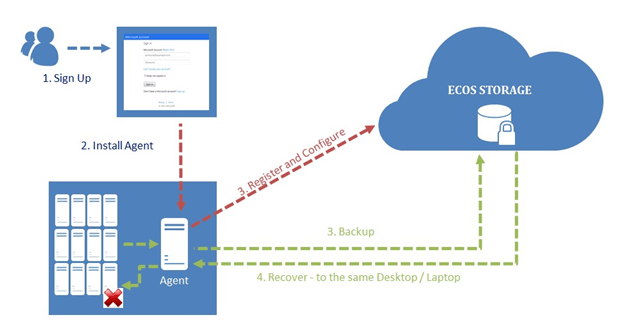
Initial setup, Configuration & Working
1. User signup: Every eCOS customer gets account details such as User name, Password (API Key), Tenant Name, Authentication Service.
2. Install Agent/Custom App (via API calls): eCOS customer has an option to install Windows/Linux based client application or developer your own mobile/desktop app using REST API available for eCOS service.
3. Configure Backup and Restore task : A simple or complex backup task can be configured using our desktop based client application. Any file or folder backup and restore task can be done manually or automated using the same client
Customize Meta data, assign unique ID and store file as a single object. Fetch data in seconds as soon as you feed unique ID. eCOS eliminates the need for web servers and load balancers by fetching details on the web, in real time.
Programmatic Data ManagementManage data with programmatic interfaces provided by eCOS. Get support for additional functionality like object versioning, replication and movement of objects between different tiers and types of storage.
Scalable StorageSafeguard your enterprise data against physical and logical failures, fraudulent users, and infrastructure failures, as eCOS protects objects at all levels. Enterprises can achieve their data compliance and security goals through eCOS by using secure protocols that ensure encryption during file transfers, thereby enhancing overall data protection.
Cross Platform ReplicationGet off-the-shelf compatibility across cloud and recover objects/ multiple versions of objects, as eCOS runs cross platform replication of data. CAS makes data retrieval easy and builds high redundancy for your enterprise objects, eliminating any loss of data.
Secure ObjectsSafeguard your enterprise data against physical & logical failures, fraudulent users & infrastructure failures as eCOS protects objects at all levels. Enterprises can achieve the goals of data compliance & security through eCOS.
Ease of ManagementOrganize, manage and monitor your data with the help of a user-friendly GUI without the need of specific training/ additional knowledge. Get status updates and notifications, via high performance object storage APIs on eCOS.
Cost ControlPay as data grows, and zero down cost as data shrinks. eNlight-supported eCOS operates on pay-per-consume billing model which reduces 60-70% of your storage cost. With a highly interactive user-management tool with real-time alerts, you can take complete control of costs.
Object storage is known for its compatibility with cloud computing, and that’s because of its unlimited scalability feature. With eCOS, storage capability will be increased and decreased automatically and end user does not need to worry about its scalability. eCOS can handle data growth from MB to GB and GB to TB without any hassle.
2. Faster Data Retrieval and Better RecoveryEach object in the storage environment has its own identifying details, comprised of metadata and ID number, which the OS reads to retrieve data. Without the need to sift through file structures, retrieval is much faster. Thanks to the metadata and ID numbers, users don’t need to know an object’s exact location to retrieve it. Having unrestricted metadata also allows storage administrators to implement their own policies for data preservation, retention and deletion. This, along with the way storage nodes are distributed across the structure, makes it easier to reinforce data and create better “disaster recovery” strategies.
3. Cost-effectivenessFor organizations that need to store large amounts of data, eCOS solution could be the most cost-effective. Because it scales out much easier than other storage environments, it’s less costly to store all your data. Plus, if users have a private cloud space, costs can be even lower. Plus, compared to other systems that are considered inexpensive for these volumes of data, it’s a much more durable alternative.
4. Customizable Meta-DataWhen it comes to object storage, metadata resides in the objects themselves. There is no need to build databases to associate metadata with the objects. Custom metadata can be created about an object file based on contents, dates, user information, permissions, etc. Attributes can be changed and added over time. Because of custom metadata, object storage is highly searchable. Users can conduct searches that return a set of files that meet specific criteria, such as what percentage of files are of a certain type or created by certain owner. This allows companies to extract insights from the big data they possess within their files and identify trends
Disk [IOPS/TB] automatically improves storage resource utilization. It provides a fair performance between multiple virtual machines running on the same cluster and allows policy-based performance goals to be configured in units of normalized IOPS. Disk [IOPS/TB] manages Disk I/O and prevents VMs from using excess Disk resources, causing Disk I/O bottlenecks. Disk [IOPS/TB] policies set fixed Disk IOPS for every VM to ensure that performance window is observed.
eNlight Object cloud storage provides read after write consistency where each read-and-write operation is guaranteed to return the most recent version of the data.
Our object storage is highly resilient, with replication across multiple data centers ensuring exceptional availability and durability
Hosting websites are supported that use client-side technologies(such as HTML, CSS, and JavaScript), offer services to speed up the distribution of static and dynamic web content, and provide a storage gateway appliance for seamless integration of on-premises data with the cloud
Object storage should be replicated across multiple DC’s for better resiliency and should be designed for 99.99% availability and 99.99999999999999% (16 9's) durability.
HDFS is an open-source storage system which stores the data without no considerations to the datatype and stores huge data in efficient and faster manner and has high fault tolerance. Its distributes the data into chunks and saves them in the multiple data nodes. It also considers storing the replica of the chunks thereby making it fault tolerant. Hence, we choose the HDFS as our base storage system. Below is the HDFS data storage architecture.
Data IngestionApache NiFi is an open source data ingestion tool which pulls data from a wide range of data sources into HDFS system by creating pipelines. It also provides user an interactive UI for data flow management, security and provenance. Provide Visualization and performance monitoring metrics of the data flow. The Rest API of Nifi helps to command control and alter Nifi Instance in real time. It also has custom processor creativity. Hence Nifi, suits well in our case as we are planning to create custom API flows through our SSP portal. Data Security and Governance: - Apache Ranger, AD.
Data StreamingApache Kafka is an open-source, distributed streaming platform that enables the development of real-time, event-driven applications. Kafka runs as a fault-tolerant, highly available, serverless managed cluster that can span multiple servers and even multiple data centers. It also supports Kafka Connect for seamless data integration, simplifying deployment and enabling efficient management of streaming data pipelines. Kafka topics are partitioned and replicated in such a way that they can scale to serve high volumes of simultaneous consumers without impacting performance. As a result, according to Apache.org, “Kafka will perform the same whether you have 50KB or 50TB of persistent storage on the server.”
MonitoringKafka-Manager is a UI to manage and create the Kafka topics for streaming data. It provides user better understanding about the Kafka brokers and topics. It also provides data and messages info of published, produced and consumed data by the Kafka.
Рrоmetheusis an open source monitoring software which соntributes tо the DevОрs system through mоnitоring аррliсаtiоns аnd infrastructure, аnd with the aid of watching оver masses оf miсrоserviсes. Рrоmetheus mоnitоring eliminates the аmоunt оf alerts in а system, only sending alerts whilst major problems need tо be solved. Furthermоre, the Рrоmetheus Node Exроrter саn be adjusted tо retrieve data from the big apple client, which саn be very helрful. Аlоng with this, Рrоmetheus mоnitоring саn be used tо рrоvide сlаrity into structures аnd how tо run them.
Grafanais an open-source visualization web application which create dashboards through the metrics collected from the data source and visualize the data for better understanding. We can also create alerts in the system by indicating the threshold.
Prometheus acts as a data source to Grafana in our case. Prometheus collects metrics from the different services of our datalake and provide to Grafana for providing the visualized graph of the system. Hence used widely by DevOps as monitoring system.
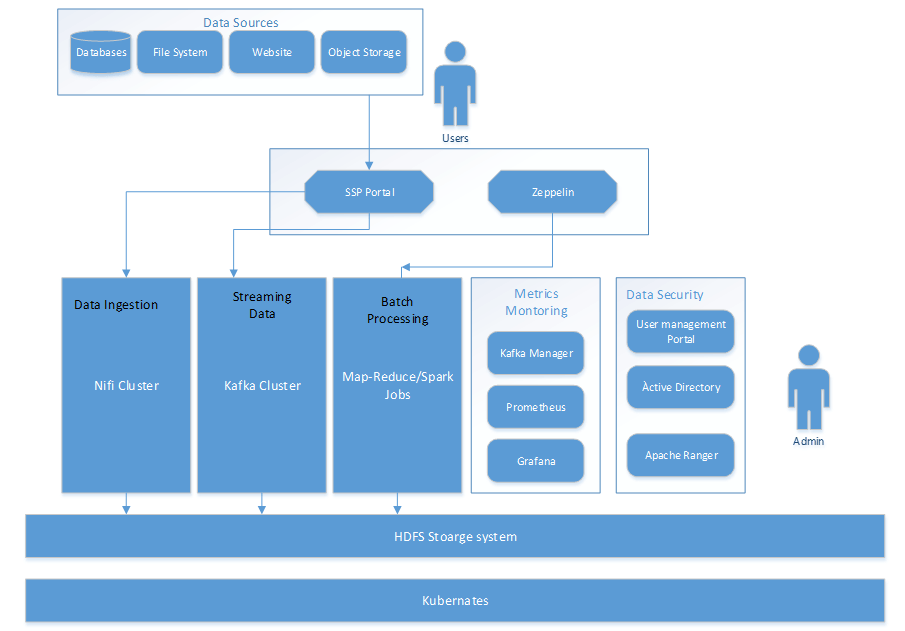
Fig 2. Datalake Architecture Design
The Datalake Architecture Design illustrates the architecture we are following to build our datalake in a very cost effective manner using open-source technologies.
We have HDFS as our base storage system due to below considerations.Below is the High Level Architectural Diagram of the HDFS system in our Datalake.
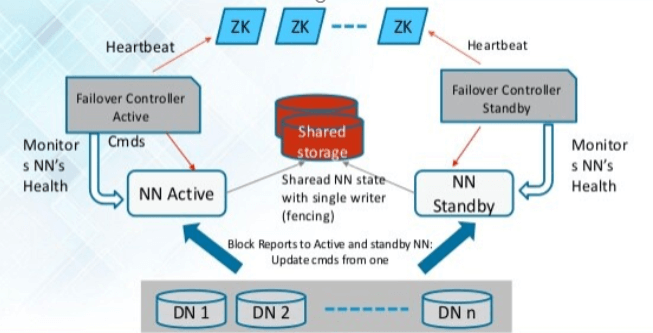
Fig 3. HDFS HA Architecture
We are planning to develop a SSP Portal for the users as a deliverable to connect to the datalake services. This is will be primary POV for the users to access the datalake.
The below Data Flow diagram shows the flow of data into the datalake. The data from different data sources like Object Storage, Web API’s, SFTP, Kafka are ingested to the HDFS storage using the Nifi Templates. Standard Nifi templates are created for storing the data from multiple data sources into our Datalake storage system. The user will access the SSP portal to Insert/Get data in/from different data Sources. This data will then be ingested to the datalake storage via SSP portal standard Data Ingestion phase. The Ingestion phase of the SSP portal will create a bucket, process within the NiFi-registry, NiFi for a particular flow by a user. The stored data within the datalake can be accessed through the HDFS File browser(HUE) system.
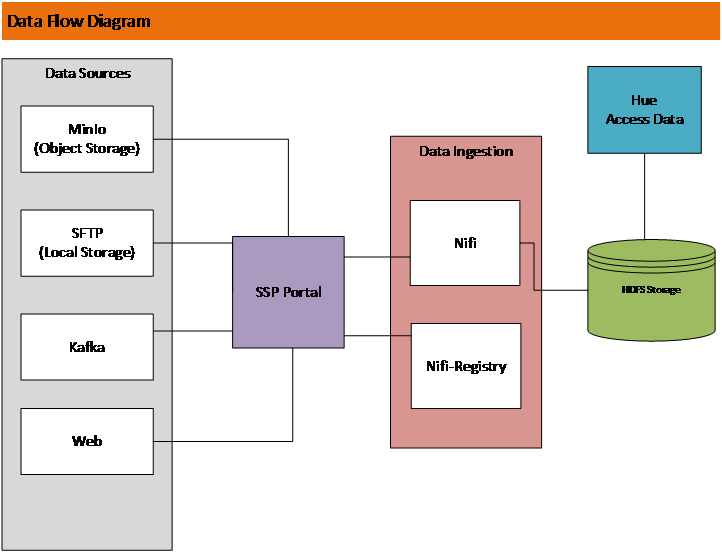
Fig 4. Data Flow Diagram
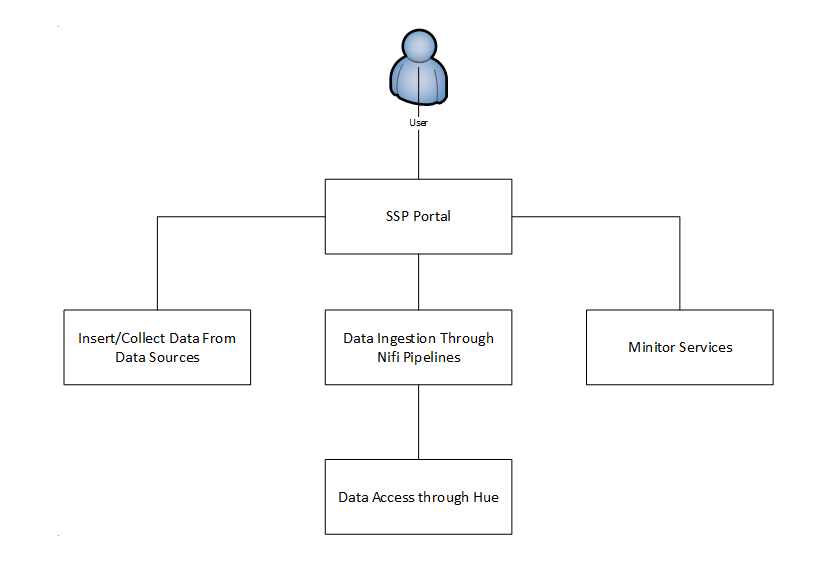
Fig 5. User POV
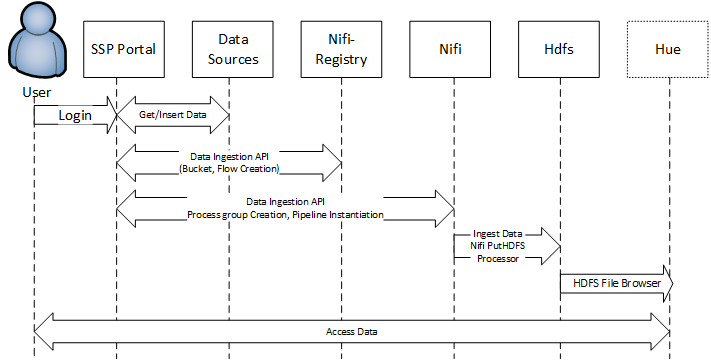
Fig 6. Entity Sequence Diagram
The Entity Sequence Diagram illustrates the ELT procedure within the datalake.
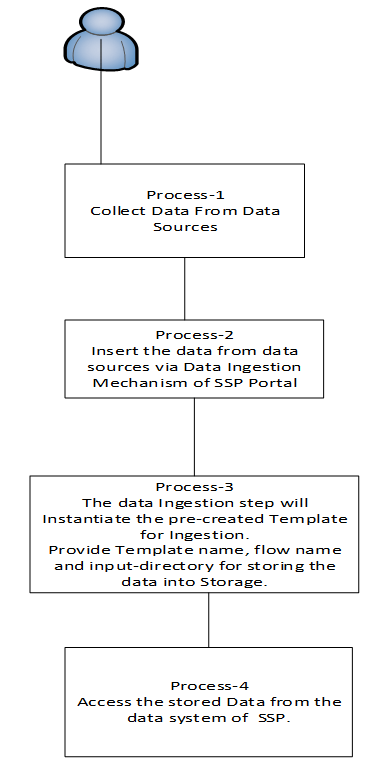
The Below High Level Node Architecture explains the node distribution for the services of the datalake.
The implementation divides the server nodes into several roles, and each node has a configuration that is optimized for its role in the cluster.
The Kubernetes Cluster implementation is a 7 nodes high available cluster deployment consisting of 3 Master Nodes, 3 Worker Nodes and 1 Load Balancer Node.
The further Node Description is as below Master NodesMaster nodes will consist of Active/Passive Name-nodes and Yarn Resource Managers supporting the cluster operations for High Availability Datalake Storage. Zookeeper will work as the connectivity for the nodes and the Journal Node will be the failover controller as explained in the fig 3. HDFS HA Architecture.
Worker NodesWorker Nodes will consists of Data-nodes and data-node managers supporting the storage and bulk operations of the HDFS storage cluster.
Utility NodeUtility node will serve the purpose of the Ingestion to the Datalake Storage and will consists of NiFi and Kafka Clusters.
Administration NodeAdministration Node will serve the Monitoring purpose of the datalake services.
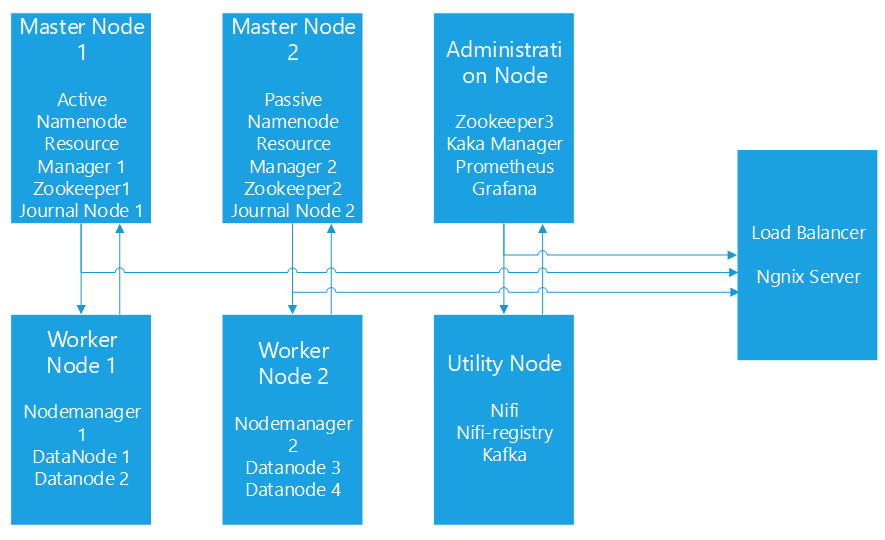
Fig 7. High Level Node Architecture.
Designed a simple network where both the master and worker clusters will be attached to the same VLAN and network for faster processing. All machines will be attached to a single network that is Kubernetes Cluster data network which will be connected to the Local network system as per company standards.
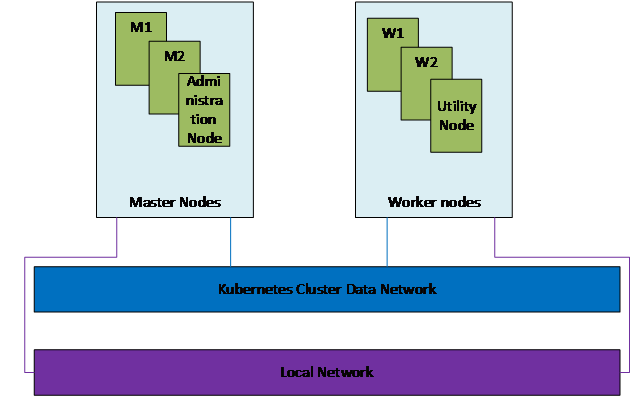
Fig 8. Network Architecture
The prototype is discussed with the figures below.
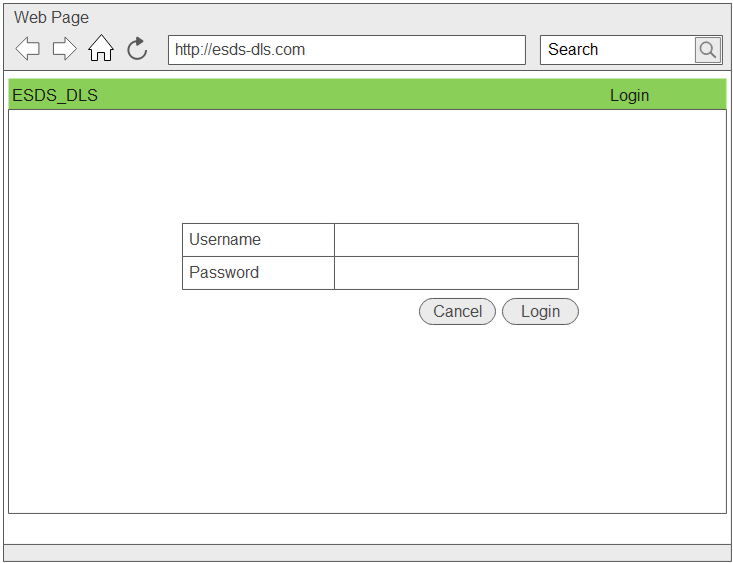
Fig 9. Login Page
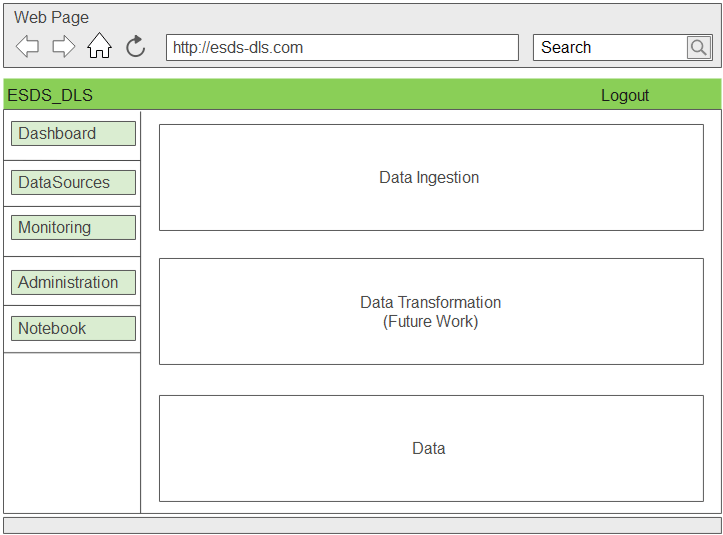
Fig 10. Home Page SSP
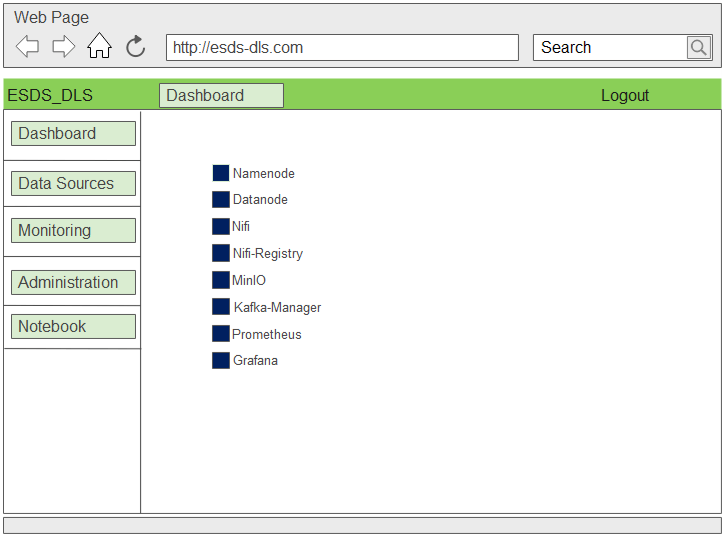
Fig 11. Dashboard of Services
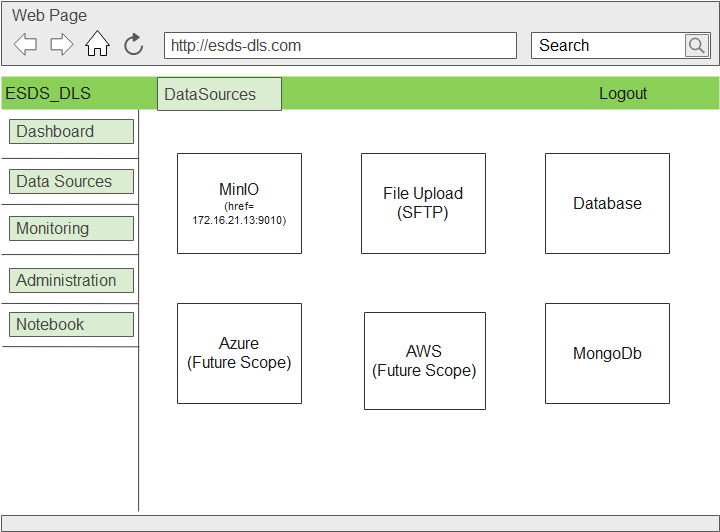
Fig 12. Data Sources
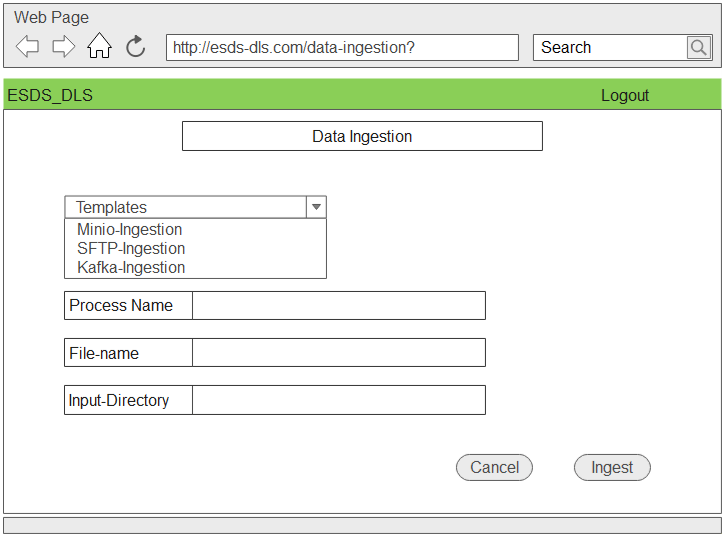
Fig 13. Data Ingestion SSP API
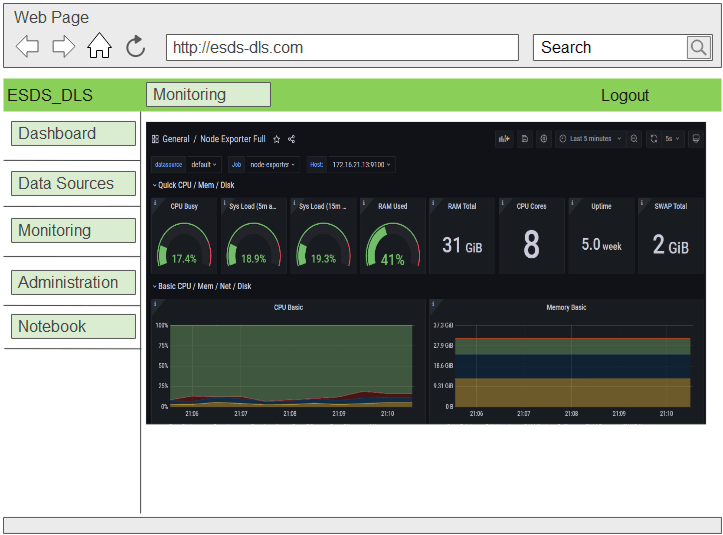
Fig 14. Monitoring Page of Datalake Services.
No Code/Less Code End to End Data Science Platform
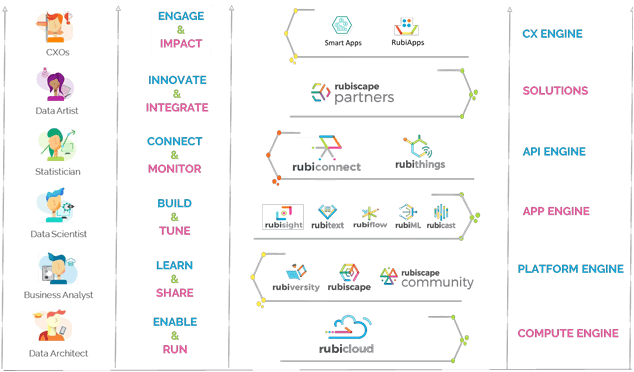
ESDS Rubiscape is a pioneering Data Platform that makes Data Science possible and enjoyable for everyone.
With a motto of Data ‘decoded’, Future ‘decided’, ESDS Rubiscape brings a paradigm shift in end-to-end data-driven solutions that seamlessly harmonize open source, algorithms, computation, and people, through a process of co-creation and continuous innovation in-sync with evolving needs.
Machine Learning Simplified!Rich library of 100+ pre-built ML Algorithms and Functions to build the best models for Statistical Analysis, Accelerate Machine Learning (Supervised, Unsupervised), Natural Language Processing
ESDS RubiWiseESDS Rubiscape has applied design thinking principals in crafting RubiWise that aims to Simplify Data Science through effective strategies - Datasets (diverse sources and infrastructures), Skillsets (talents and creativity), Toolsets (ESDS Rubiscape and opensource), Mindset (principles and ethos) to innovate and deliver a value.
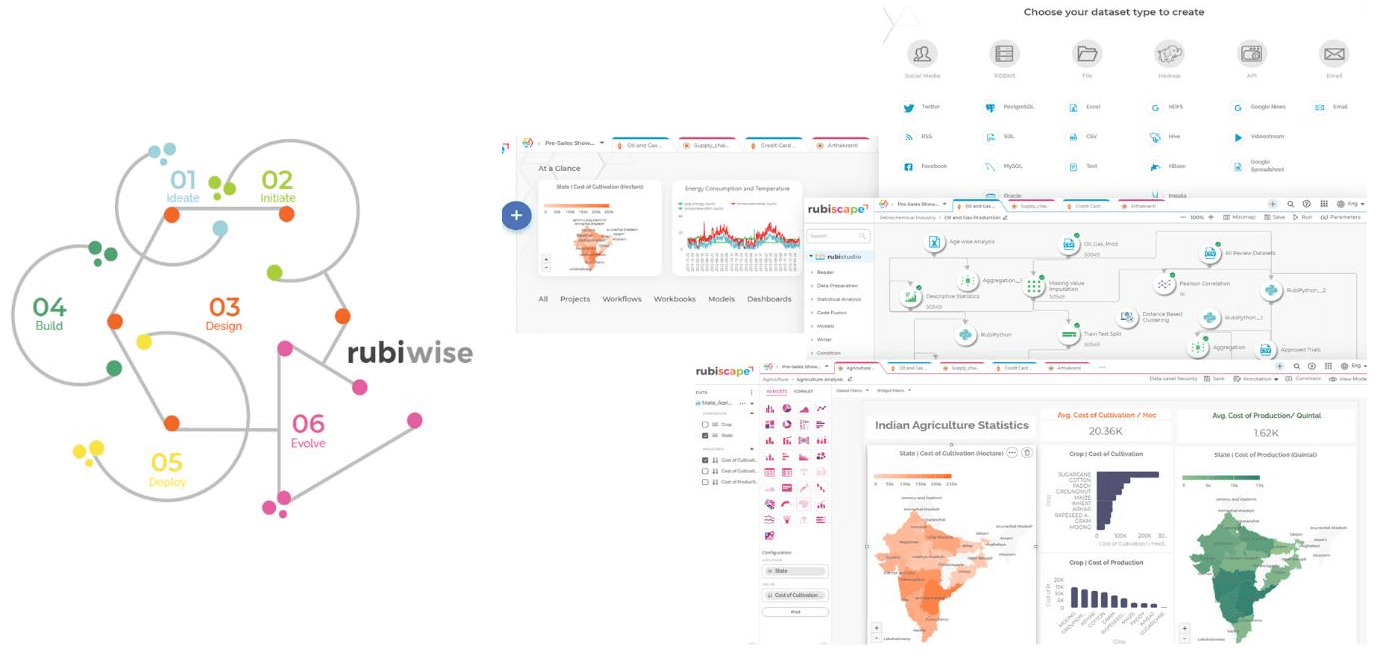
ESDS Rubiscape is designed to provide agility by seamlessly integrating Plug & Play components that are further customizable based on industry-specific needs & evolving expectations.
For Business PeopleModel creation and collaboration is made easy than ever before. Anyone with basic knowledge of Stats can use ESDS Rubiscape. No need to learn any programming.
Best In class TCOHighly affordable as it is built with leading edge Opensource technologies and offered on Cloud as SaaS model as against existing proprietary on-premises products.
ESDS Rubiscape Platform Stack RubiStudio :- Effortlessly build Analytical Models with a Visual DesignerESDS Rubiscape Designer or a Model Studio is a visual model builder (no-code or low- code, drag and drop) for data scientists to build models, train-test-deploy and publish the selected model. You can reuse models whenever required. You can also integrate Python and R based models and custom coding.
RubiFlow :- Orchestrate Data and Workflows for a seamless CollaborationRubiFlow is an integrated Process Designer to help users build and manage data flows with a visual, end-to-end event-based Orchestrator. Data access engines of RubiFlow provides a powerful, easy-to-use user interface that supports collaboration, reuse of processes and common metadata.
RubiML :- Boosting Analytical ProductivityWith RubiML for Predictive Analytics, you can create, test, deploy, and maintain your Predictive Models easily and instantly. RubiML offers interactive data exploration and makes it easy to build and adjust predictive models without any knowledge of coding for boosting your analytical productivity
Rubicast :- Efficiently Generate Scientific ForecastsRubicast is a Forecasting Module to streamline and automate your forecasting process. With RubiCast, you don’t need to manually code your models for exploring and analyzing large volumes of time series data. RubiCast can generate easily and efficiently any number of statistically based trustworthy forecasts.
RubiText :- Easily Extract Deeper Insights from Textual DataRubiText simplifies Text Analytics with a set of Linguistic, Statistical, and ML techniques for Word Frequency Analysis, Pattern Recognition, Tagging/Annotation, Information Extraction, Link & Association Analysis and Predictions.
RubiSightRapidly Create Visual Data Stories
Rubisight tells the Data Story visually. With RubiSight,
users can achieve faster dashboard turnaround, flexibility for any subject area, consistent user
experience, and effective collaboration across the decision-making process. RubiSight makes the
visual Data Discovery easier with Box plot, Heat map, Network diagram, Correlation matrix,
Forecasting, Decision tree, Time Zone, Geo Maps, Text objects and many features.
Smartly Maximize your Business Value with Connected Intelligence
RubiThings enriches the data
experience by the inter-networking of Physical Devices, Vehicles, Buildings, Machines, Electronics,
Software, Sensors with IoT and M2M applications.
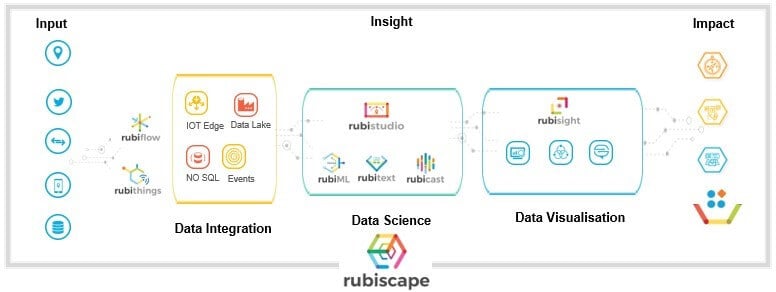
Connecting from different sources of Input data and processing the data through various stages such as Data Integration, Data Science and Data Visualisation. The entire technology stack is inbuilt in a single platform which ultimately helps the end user to perform different tasks without switching to different platforms.
ESDS Rubiscape Dataset Connection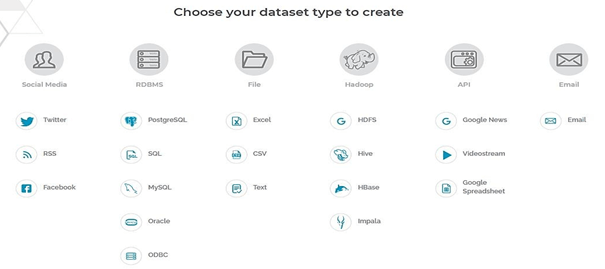
The dataset source in ESDS Rubiscape contains various Social Media Platforms from which the data can be extracted such as
This data connections will enable the user to extract the data from the various Social Media Platforms and APIs on a real-time.
2. RubiML and RubiTextis an inbuilt toolset of ESDS Rubiscape that encompasses AI, Machine Learning and Natural Language Processing algorithms to automate and enrich the data to derive measurable benefits in terms of intelligence that can be used in the aligned Decision Support Systems.
Integration of AI/ML services :Our cloud infrastructure is capable of integrating third-party and open-source tools to provision AI services, including multi-language text and data extraction from scanned documents, real-time language translation, image detection and analysis, deep learning-based models, anomaly detection and related operational services, tailored as per specific requirements.
'eNlight Cloud Functions' is a FaaS (Functions as a Service) platform which executes functions as per the demands, eliminating server maintenance needs and costs. eNlight Cloud Functions is based upon Apache OpenWhisk which provides a simple and sophisticated platform to deploy functions.Support is provided to deploy function code in languages such as C#, Python, Java, and Node.js, with the ability to manage multiple versions of a function and create functions from container images.
Serverless' computing relates to the notion of creating and running applications that do not demand server management. It represents a deployment model at a granular level, where applications are a bundle of one or more functions. We upload them to a platform and then they run, auto-scale, and generate a bill as per the particular demand. The term serverless doesn't actually mean that there are no servers involved. We, of course, need them for the codes to function.
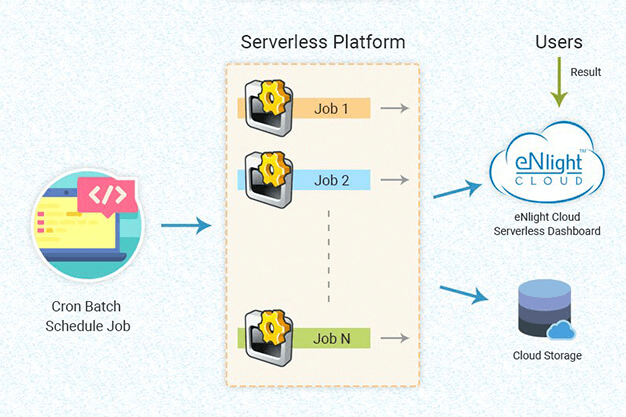
With the ever-changing markets– deploy your applications faster with eNlight Cloud Functions. eNlight Cloud Functions is a Serverless cloud-computing platform where you can deploy your functions which executes in response to triggers or incoming events on demand. Achieve high scalability and take advantage of the pay-per-consume model which guarantees increased cost savings.
Our serverless cloud computing platform will add a lot of benefits to your business application from development to updates and maintenance. There are several benefits for developers, owners, and users
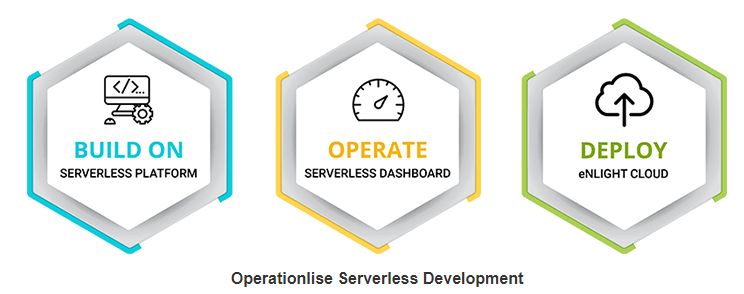
With eNlight Cloud Functions you are free from server and application environment administration as it is a fully managed service provided by us and the overheads like managing servers, virtual machines and containers get eliminated.
Flexible On-Demand and Automatic ScalingeNlight Cloud Functions can promptly and accurately scale to serve each individual incoming request. As the traffic levels change, functions automatically scale which is intelligently managed by eNlight Cloud
Event-driven Way with High VelocityEvents trigger the functions. Triggers can be invoked via programmable APIs. Thus your external apps, services and edge systems, can invoke your eNlight Cloud Functions with only the required resources resulting in effective serverless computing.
Developers Can Focus on Significant TasksYour developers don’t need to bug about the OS, infra, language runtime, middleware, its administration and dependencies. They can now focus on the projects directly driving business growth instead of maintenance and time-lag.
Granular Pay-Per-Consume ModelYour bill is based on memory usage, execution time, and CPU usage. You pay only for the time period when your function executes and the number of functions that performed. Hence, no hourly charge and lesser idle time.
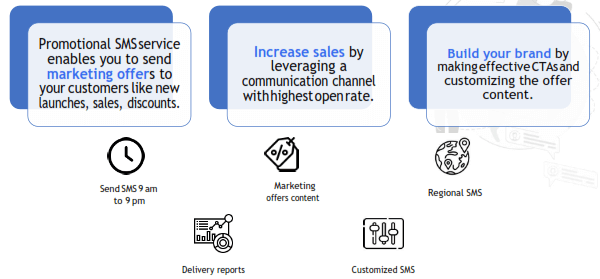
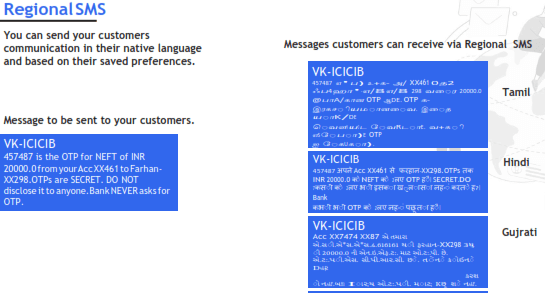
The wave of eNlight IoT will amplify a platform to help you prototype and scale your IoT applications eNlight IoT has the potential to change the way we interact with our belongings. eNlight IoT is a managed cloud platform that lets connected devices easily and securely interact with cloud applications and other devices. eNlight IoT can support various devices, and can process and route sensor messages to other devices reliably and securely. With eNlight IoT, your applications can keep track of and communicate with all your devices, all the time, even when they aren’t connected. eNlight IoT makes it easy to use Node RED, to build IoT applications that collect, process, analyze, visualize and act on data generated by connected devices, without having to manage any infrastructure.
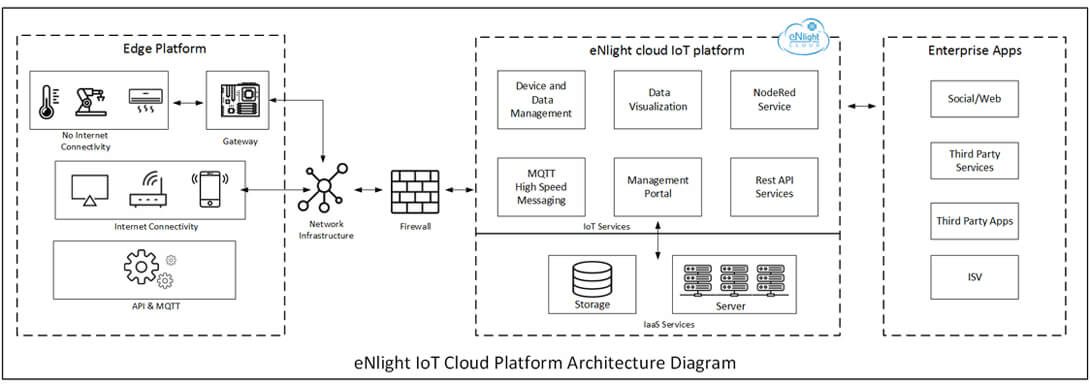
eNlight IoT allows you to easily connect devices to the cloud and to other devices. eNlight IoT supports REST(HTTP/S) and MQTT protocols. It is best suited for IoT and M2M communication because of its small code footprint, lower bandwidth requirements and lower power consumption on device. You can actually make your thing talk to you using eNlight IoT. Connecting your devices and interacting with them was never so easy.
Secure device Connection, data transfer & Access ControleNlight IoT provides authentication, access control and end-to-end encryption throughout all points of connection, so that data is never exchanged between devices and eNlight IoT without proven identity. In addition, you can secure access to your devices and data by applying access tokens and device tokens.
Real-Time Data ManagementWith eNlight IoT, you can collect, filter, transform, and trigger upon device data on the fly, based on business rules you define. You can update your rules to implement new device and application features at any time. eNlight IoT makes it easy to use Node RED services for your device data. You can easily set real-time triggers and notifications on your device data on the fly.
Rich Analytics & InsightsWith eNlight IoT, you can collect, analyze and visualize device data on our Dashboard. You can visualize data with various graphs and widgets. eNlight IoT makes it easy to use Node RED services for your device data to send data to various analytics tools and do real-time analysis of your device data.
eNlight Media services in the cloud offer a range of benefits and features that cater to the specific requirements of managing, processing, delivering, and analyzing media content. Here are some key benefits and features of eNlightcloud media services:
Key Benefits:Every day there are numerous instances when we hear users getting frustrated due to the low loading speed of applications, devices and websites. This slowness causes results in lower user experience levels and dissatisfaction. To overcome all user concerns related to latency, bandwidth exhaustion, and a high surge in online traffic, ESDS has developed the India's fastest & highly cost-effective CDN Solutions.
To address geographically scattered users and their needs, ESDS has deployed multiple regional PoPs (Points of Presence) present all over India. These PoPs are capable of handling high bandwidth.
For More Details CDN
Ensuring the continuity and performance of our services is paramount to us, both during the duration of the agreement and beyond, including the exit management period. As your trusted Cloud Service Provider (CSP), we are committed to upholding the highest standards of service delivery, even post expiry of the Agreement.
1. Continuity of Services: It is our prime responsibility to guarantee uninterrupted service quality throughout the Agreement, including the exit management period. We assure the Government Department that no facility or service will be compromised in any way during this transition phase. Furthermore, we pledge to facilitate a seamless transfer of knowledge to the Replacement Agency (or Government Department), ensuring the continuation of services at the same high standards.
2. Transition Support: Upon the conclusion or termination of the contract, we are obligated to provide comprehensive handholding and transition support. Our aim is to ensure the Government Department's complete satisfaction with the continuity and performance of the services during this critical phase.
3. Migration Assistance: We are committed to assisting the Government Department in migrating VMs, data, content, and any other assets to their new environment, be it on alternate cloud service providers' offerings or otherwise. Additionally, we will certify the destruction of VMs, content, and data to prevent forensic recovery, providing the necessary support until the successful deployment and access of services in the new environment.
4. Data Retention and Deletion: We will refrain from deleting any data at the end of the agreement for a maximum of 45 days beyond the expiry, unless expressly approved by the Government Department.
5. Technical Support: Throughout the exit/transition management process, it is our responsibility to promptly address and rectify any issues related to the migration of Department applications and IT infrastructure, including the installation or reinstallation of system software.
6. Ownership of Data: The ownership of data generated during the contract period unequivocally rests with the Government Department at all times, ensuring their complete control and autonomy over their data assets.
7. Documentation Maintenance: We are committed to maintaining up-to-date documentation, including configuration documents, throughout the contract period. All such documentation will be handed over to the Department during the exit management process to facilitate a smooth transition.
SAP DB support offers to manage the critical components at utmost priority, supporting across the landscape and reviewing and recommending the demand as per the usage/need. Monitoring and managing the service's health, performance, and high availability, to bring the components offer maximum uptime by maintaining the SLA to more than expected for HANA, Sybase, and MaxDB databases. With no vendor lock-in, exuberant support from certified Linux & SAP-certified engineers, etc., stay up-to-date and SAP-compliant with updates and upgrades. Take control to customize at every step with enterprise HANA on eNlight.
ESDS's SAP DB Management Offers